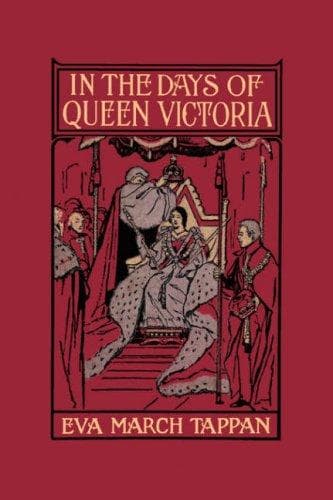
Great Britain -- History -- Victoria, 1837-1901 -- Fiction
Neither the Queen nor the Prince Consort, for that title had been
granted to Prince Albert long before, was satisfied with this paper,
and the following morning he wrote a statement to be sent to the Prime
Minister to the effect that the paper ought to mention the friendship
between the two countries and the hope and expectation of England that
the United States would say the seizure was not done by government
authority. Prince Albert and the Queen read the statement over
together. She made two or three small changes in the wording, then
copied it and sent it to the Prime Minister. He admitted at once that
the Queen and the Prince were in the right, and wrote another dispatch
to send to the United States, saying, of course, that an apology and
the surrender of the men were expected, but wording the demand in a
most courteous and friendly manner.
In the United States, as soon as President Lincoln heard of the
capture, he said, "This won't do. Captain Wilkes is exercising the
'right of search,' and we fought England in 1812 on that very ground.
Those men must be given up." There were thousands, however, who were so
excited that they were ready to fight anybody for anything or for
nothing, and if the Prime Minister's first dispatch had been sent, it
would have been hard to prevent hostilities; but in so moderate a
request for fairness, even the most hot-blooded could find little
excuse for demanding a declaration of war.
So it was that Prince Albert and the Queen saved the two countries from
bloodshed, and if the Prince had done nothing else in his twenty-one
years of acting as chief adviser to the Queen, that one act would have
been glory enough. But when one remembers the vast number of matters
which he had to consider, it does not seem as if one man's mind could
have held them all. Laying corner stones, unveiling statues, presiding
over learned societies, guiding the education of his children, planning
palaces, and managing large estates--all this was but a small part of
his labors. He carried out reforms in the navy, he studied on
commercial treaties between England and other countries, he reorganized
the army, he wrote on improved methods of agriculture, he constructed
better national defenses, he kept himself well informed concerning the
condition of the United States, India, South Africa, and every country
of Europe. After twenty-one years of such intense work as this, it is
no wonder that he was exhausted. He rarely spoke of his weariness; but
here and there in his letters and in his conversation with the Queen, a
word was dropped that showed how weak and tired he felt. He slept
little, yet he never thought of sparing himself, and he wrote the
letter about the _Trent_ affair with a very feeble hand. "I could
hardly hold my pen while writing," he told the Queen, and at last he
admitted that he was thoroughly miserable.
Public-domain text, read in full here on John Shaqi.
Reviews
Reviews
No reviews yet
Be the first to share your thoughts on this work.
Elsewhere in the archive
Join the Discussion
Join the discussion
Sign in to leave a comment or review.
Sign InorCreate an account