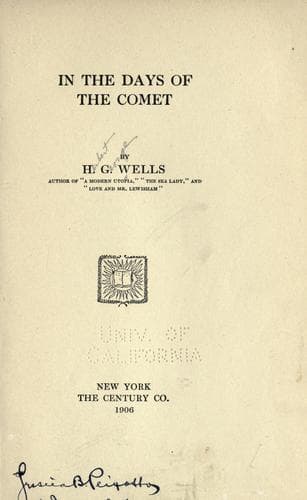
In the Days of the CometWells, H. G. (Herbert George)
Science
In the Days of the Comet
Wells, H. G. (Herbert George)
Comets -- Collisions with Earth -- Fiction; Political fiction; Science fiction; Utopian fiction; Utopias -- Fiction
All these vast cities have given way and gone, even as my native
Potteries and the Black Country have gone, and the lives that were
caught, crippled, starved, and maimed amidst their labyrinths, their
forgotten and neglected maladjustments, and their vast, inhuman,
ill-conceived industrial machinery have escaped—to life. Those cities
of growth and accident are altogether gone, never a chimney smokes
about our world to-day, and the sound of the weeping of children who
toiled and hungered, the dull despair of overburdened women, the noise
of brute quarrels in alleys, all shameful pleasures and all the ugly
grossness of wealthy pride have gone with them, with the utter change
in our lives. As I look back into the past I see a vast exultant dust
of house-breaking and removal rise up into the clear air that followed
the hour of the green vapors, I live again the Year of Tents, the Year
of Scaffolding, and like the triumph of a new theme in a piece of
music—the great cities of our new days arise. Come Caerlyon and
Armedon, the twin cities of lower England, with the winding summer city
of the Thames between, and I see the gaunt dirt of old Edinburgh die to
rise again white and tall beneath the shadow of her ancient hill; and
Dublin too, reshaped, returning enriched, fair, spacious, the city of
rich laughter and warm hearts, gleaming gaily in a shaft of sunlight
through the soft warm rain. I see the great cities America has planned
and made; the Golden City, with ever-ripening fruit along its broad
warm ways, and the bell-glad City of a Thousand Spires. I see again as
I have seen, the city of theaters and meeting-places, the City of the
Sunlight Bight, and the new city that is still called Utah; and
dominated by its observatory dome and the plain and dignified lines of
the university façade upon the cliff, Martenābar the great white winter
city of the upland snows. And the lesser places, too, the townships,
the quiet resting-places, villages half forest with a brawl of streams
down their streets, villages laced with avenues of cedar, villages of
garden, of roses and wonderful flowers and the perpetual humming of
bees. And through all the world go our children, our sons the old world
would have made into servile clerks and shopmen, plough drudges and
servants; our daughters who were erst anaemic drudges, prostitutes,
sluts, anxiety-racked mothers or sere, repining failures; they go about
this world glad and brave, learning, living, doing, happy and
rejoicing, brave and free. I think of them wandering in the clear quiet
of the ruins of Rome, among the tombs of Egypt or the temples of
Athens, of their coming to Mainington and its strange happiness, to
Orba and the wonder of its white and slender tower. . . . But who can
tell of the fullness and pleasure of life, who can number all our new
cities in the world?—cities made by the loving hands of men for living
men, cities men weep to enter, so fair they are, so gracious and so
kind. . . .
Public-domain text, read in full here on John Shaqi.
Reviews
Reviews
No reviews yet
Be the first to share your thoughts on this work.
Elsewhere in the archive
Join the Discussion
Join the discussion
Sign in to leave a comment or review.
Sign InorCreate an account