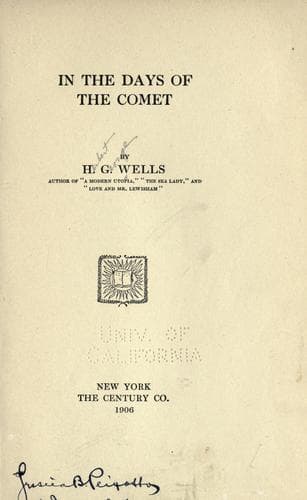
In the Days of the CometWells, H. G. (Herbert George)
Science
In the Days of the Comet
Wells, H. G. (Herbert George)
Comets -- Collisions with Earth -- Fiction; Political fiction; Science fiction; Utopian fiction; Utopias -- Fiction
Most of our public buildings we destroyed and burnt as we reshaped our
plan of habitation, our theater sheds, our banks, and inconvenient
business warrens, our factories (these in the first year of all), and
all the “unmeaning repetition” of silly little sham Gothic churches and
meeting-houses, mean looking shells of stone and mortar without love,
invention, or any beauty at all in them, that men had thrust into the
face of their sweated God, even as they thrust cheap food into the
mouths of their sweated workers; all these we also swept away in the
course of that first decade. Then we had the whole of the superseded
steam-railway system to scrap and get rid of, stations, signals,
fences, rolling stock; a plant of ill-planned, smoke-distributing
nuisance apparatus, that would, under former conditions, have
maintained an offensive dwindling obstructive life for perhaps half a
century. Then also there was a great harvest of fences, notice boards,
hoardings, ugly sheds, all the corrugated iron in the world, and
everything that was smeared with tar, all our gas works and petroleum
stores, all our horse vehicles and vans and lorries had to be erased. .
. . But I have said enough now perhaps to give some idea of the bulk
and quality of our great bonfires, our burnings up, our meltings down,
our toil of sheer wreckage, over and above the constructive effort, in
those early years.
But these were the coarse material bases of the Phœnix fires of the
world. These were but the outward and visible signs of the innumerable
claims, rights, adhesions, debts, bills, deeds, and charters that were
cast upon the fires; a vast accumulation of insignia and uniforms
neither curious enough nor beautiful enough to preserve, went to swell
the blaze, and all (saving a few truly glorious trophies and memories)
of our symbols, our apparatus and material of war. Then innumerable
triumphs of our old, bastard, half-commercial, fine-art were presently
condemned, great oil paintings, done to please the half-educated
middle-class, glared for a moment and were gone, Academy marbles
crumbled to useful lime, a gross multitude of silly statuettes and
decorative crockery, and hangings, and embroideries, and bad music, and
musical instruments shared this fate. And books, countless books, too,
and bales of newspapers went also to these pyres. From the private
houses in Swathinglea alone—which I had deemed, perhaps not unjustly,
altogether illiterate—we gathered a whole dust-cart full of cheap
ill-printed editions of the minor English classics—for the most part
very dull stuff indeed and still clean—and about a truckload of thumbed
and dog-eared penny fiction, watery base stuff, the dropsy of our
nation’s mind. . . . And it seemed to me that when we gathered those
books and papers together, we gathered together something more than
print and paper, we gathered warped and crippled ideas and contagious
base suggestions, the formulae of dull tolerances and stupid
Public-domain text, read in full here on John Shaqi.
Reviews
Reviews
No reviews yet
Be the first to share your thoughts on this work.
Elsewhere in the archive
Join the Discussion
Join the discussion
Sign in to leave a comment or review.
Sign InorCreate an account