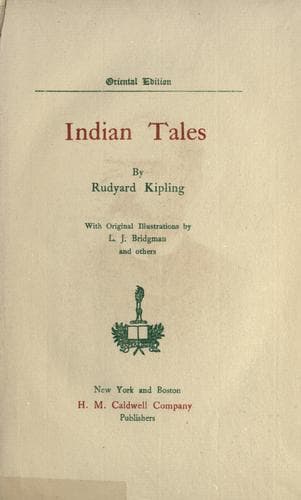
India -- Social life and customs -- Fiction; Short stories, English
After he had made an unsuccessful attempt to enter the Roman Catholic
Church and the Presbyterian fold at the same time (the Missionaries found
him out and called him names, but they did not understand his trouble), he
discovered Lalun on the City wall and became the most constant of her few
admirers. He possessed a head that English artists at home would rave over
and paint amid impossible surroundings--a face that female novelists would
use with delight through nine hundred pages. In reality he was only a
clean-bred young Muhammadan, with penciled eyebrows, small-cut nostrils,
little feet and hands, and a very tired look in his eyes. By virtue of his
twenty-two years he had grown a neat black beard which he stroked with
pride and kept delicately scented. His life seemed to be divided between
borrowing books from me and making love to Lalun in the window-seat. He
composed songs about her, and some of the songs are sung to this day in
the City from the Street of the Mutton-Butchers to the Copper-Smiths'
ward.
One song, the prettiest of all, says that the beauty of Lalun was so great
that it troubled the hearts of the British Government and caused them to
lose their peace of mind. That is the way the song is sung in the streets;
but, if you examine it carefully and know the key to the explanation, you
will find that there are three puns in it--on "beauty," "heart," and
"peace of mind,"--so that it runs: "By the subtlety of Lalun the
administration of the Government was troubled and it lost such and such a
man." When Wali Dad sings that song his eyes glow like hot coals, and
Lalun leans back among the cushions and throws bunches of jasmine-buds at
Wali Dad.
Public-domain text, read in full here on John Shaqi.
Reviews
Reviews
No reviews yet
Be the first to share your thoughts on this work.
Elsewhere in the archive
Join the Discussion
Join the discussion
Sign in to leave a comment or review.
Sign InorCreate an account