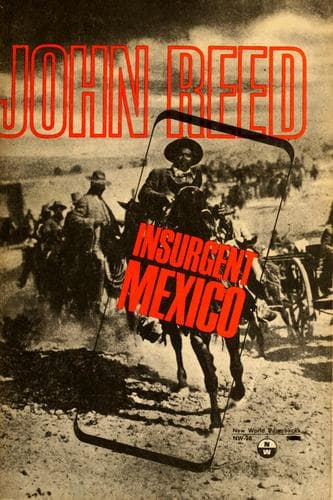
Mexico -- History -- 1910-1946; Mexico -- History -- Revolution, 1910-1920
The wounded began creeping through the plain obscurely in the dense
darkness. Their cries and groans could be distinctly heard, though the
battle noise drowned every other sound—you could even hear the rustle of
the bushes as they crept through, and their dragging feet on the sand.
A horseman passed along the path below me, cursing furiously that he
must leave the battle because his arm was broken, and weeping between
curses. Then came a footman, who sat at the foot of my bank and nursed
a hand, talking without cessation about all sorts of things to keep from
a nervous breakdown.
"How brave we Mexicans are," he said drolly. "Killing each other like
this!..."
I soon went back to camp, sick with boredom. A battle is the most
boring thing in the world if it lasts any length of time. It is all the
same.... And in the morning I went to get the news at headquarters. We
had captured Lerdo, but the Cerro, the Corral and the cuartel were still
the enemy’s. All that slaughter for nothing!
*CHAPTER XIV*
*THE FALL OF GOMEZ PALACIO*
"El Niño" was now within half a mile of the town, and the workmen of the
repair gang labored on the last stretch of track under heavy shrapnel
fire. The two cannon on the front of the trains bore all the brunt of
their artillery, and bravely did they return the fire—so well, in fact,
that after one Federal shell had killed ten workmen, "El Niño’s" captain
put two guns on the Cerro out of action. So the Federals left the
trains alone and turned their attention to shelling Herrera out of
Lerdo.
The Constitutionalist army was terribly shattered. In the four days’
fighting about a thousand men had been killed and almost two thousand
more wounded. Even the excellent hospital train was inadequate to
handle the wounded. Out on the wide plain where we were the faint smell
of dead bodies pervaded everything. In Gomez it must have been horrible.
Thursday the smoke from twenty funeral pyres stained the sky. But Villa
was more determined than ever. Gomez must be taken, and quickly. He
didn’t have ammunition or supplies enough for a siege, and, moreover,
his name was a legend already with the enemy—wherever Pancho Villa
appeared in battle, they had begun to believe it lost. And the effect on
his own troops was most important, too. So he scheduled another night
attack.
"The track is all repaired," reported Calzado, Superintendent of the
Railways.
"Good," said Villa. "Bring up all the trains from the rear to-night,
because we’re going into Gomez in the morning!"
Public-domain text, read in full here on John Shaqi.
Reviews
Reviews
No reviews yet
Be the first to share your thoughts on this work.
Elsewhere in the archive
Join the Discussion
Join the discussion
Sign in to leave a comment or review.
Sign InorCreate an account