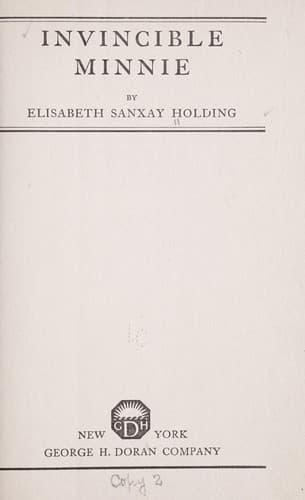
Bigamy -- Fiction; Man-woman relationships -- Fiction; Mothers -- Fiction; Sisters -- Fiction; Young women -- Fiction
If it hadn’t been for Horace, he would have been entirely discouraged.
But so long as there was Horace to find him jobs and to support him
during the intervals, he kept up his courage. There was the possibility
of something delightful just round the corner. He rather enjoyed
working, and trying new things. And it didn’t matter so very much if he
_did_ fail. There was always another chance to be had.
II
It was a very hot day in August, and Lionel found the trip from the city
to his home suburb far from agreeable. He was in one of his moods for
despising everything in his adopted country, a mood familiar to every
alien in every country under the sun. He hated the way the people made
themselves comfortable on the train, men with handkerchiefs in their
collars and women in what he savagely called “ball dresses.” Personally
he accepted hot weather in the proper British spirit, as one of the
afflictions of the country, and he scorned to notice it by any extreme
change of costume or of habit. He sat by an open window, but he kept his
hat on, and his coat, and maintained at least a cool expression.
Three years of trouble had changed his appearance very little. He was as
slim, as elegant, as supercilious as ever, in spite of increasing
shabbiness. He had come from an interview with a corset manufacturer
who had advertised for salesmen, and who had instantaneously and
violently rejected Lionel. He really couldn’t find anything to do. He
wanted to work, and to succeed, but it was a bit too hard. What
advantages he had were unmarketable. He was bored with sitting about at
home, and he wanted very much to be independent of Horace and free from
debt and worry, and he wanted new clothes. Poverty was beginning to
disagree with him acutely.
“No use!” he said gloomily, as he came up the steps and sat down on the
tiny front porch where Minnie was sewing, and keeping an eye on their
child, digging in the sunny gutter. “What about a cup of tea?”
Then he noticed that she looked “queer.”
“What’s wrong?” he asked. “Heat too much for you, old girl?”
“No,” she said, and was silent for a moment. Then: “telegram from ...
I’m so sorry ... poor Horace is dead.”
He had an odd feeling of deliberately putting off his grief until a more
fitting time. He discussed the thing with Minnie as if it concerned a
stranger. Apoplexy. Not to be wondered at. The funeral was to be on
Thursday.
“I don’t suppose Julie will be heart-broken,” said Minnie. “She’ll be
very well off, won’t she, Lionel?”
He was aware that she longed to discuss his own prospects; how “well
off” he was to be, but he refused to open the subject. It wasn’t decent.
No doubt Horace had done the proper thing.
Public-domain text, read in full here on John Shaqi.
Reviews
Reviews
No reviews yet
Be the first to share your thoughts on this work.
Elsewhere in the archive
Join the Discussion
Join the discussion
Sign in to leave a comment or review.
Sign InorCreate an account