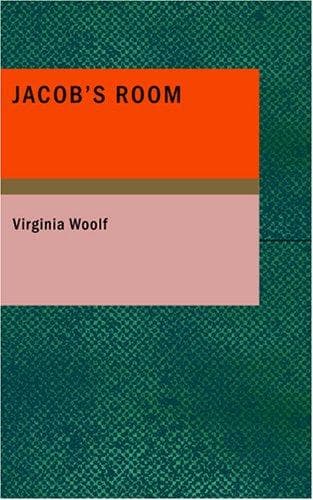
England -- Fiction; Experimental fiction; Psychological fiction; World War, 1914-1918 -- England -- Fiction; Young men -- Fiction
Now the agitation of the air uncovered a racing star. Now it was dark.
Now one after another lights were extinguished. Now great
towns--Paris--Constantinople--London--were black as strewn rocks.
Waterways might be distinguished. In England the trees were heavy in
leaf. Here perhaps in some southern wood an old man lit dry ferns and
the birds were startled. The sheep coughed; one flower bent slightly
towards another. The English sky is softer, milkier than the Eastern.
Something gentle has passed into it from the grass-rounded hills,
something damp. The salt gale blew in at Betty Flanders's bedroom
window, and the widow lady, raising herself slightly on her elbow,
sighed like one who realizes, but would fain ward off a little
longer--oh, a little longer!--the oppression of eternity.
But to return to Jacob and Sandra.
They had vanished. There was the Acropolis; but had they reached it? The
columns and the Temple remain; the emotion of the living breaks fresh on
them year after year; and of that what remains?
As for reaching the Acropolis who shall say that we ever do it, or that
when Jacob woke next morning he found anything hard and durable to keep
for ever? Still, he went with them to Constantinople.
Sandra Wentworth Williams certainly woke to find a copy of Donne's poems
upon her dressing-table. And the book would be stood on the shelf in the
English country house where Sally Duggan's Life of Father Damien in
verse would join it one of these days. There were ten or twelve little
volumes already. Strolling in at dusk, Sandra would open the books and
her eyes would brighten (but not at the print), and subsiding into the
arm-chair she would suck back again the soul of the moment; or, for
sometimes she was restless, would pull out book after book and swing
across the whole space of her life like an acrobat from bar to bar. She
had had her moments. Meanwhile, the great clock on the landing ticked
and Sandra would hear time accumulating, and ask herself, "What for?
What for?"
"What for? What for?" Sandra would say, putting the book back, and
strolling to the looking-glass and pressing her hair. And Miss Edwards
would be startled at dinner, as she opened her mouth to admit roast
mutton, by Sandra's sudden solicitude: "Are you happy, Miss Edwards?"--a
thing Cissy Edwards hadn't thought of for years.
"What for? What for?" Jacob never asked himself any such questions, to
judge by the way he laced his boots; shaved himself; to judge by the
depth of his sleep that night, with the wind fidgeting at the shutters,
and half-a-dozen mosquitoes singing in his ears. He was young--a man.
And then Sandra was right when she judged him to be credulous as yet. At
forty it might be a different matter. Already he had marked the things
he liked in Donne, and they were savage enough. However, you might place
beside them passages of the purest poetry in Shakespeare.
Public-domain text, read in full here on John Shaqi.
Reviews
Reviews
No reviews yet
Be the first to share your thoughts on this work.
Elsewhere in the archive
Join the Discussion
Join the discussion
Sign in to leave a comment or review.
Sign InorCreate an account