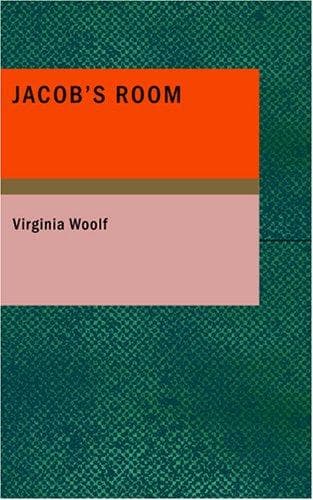
England -- Fiction; Experimental fiction; Psychological fiction; World War, 1914-1918 -- England -- Fiction; Young men -- Fiction
For the most part the students wait their turn very patiently. To stand
and wait while some one examines white discs is soothing. The umbrella
will certainly be found. But the fact leads you on all day through
Macaulay, Hobbes, Gibbon; through octavos, quartos, folios; sinks deeper
and deeper through ivory pages and morocco bindings into this density of
thought, this conglomeration of knowledge.
Jacob's walking-stick was like all the others; they had muddled the
pigeon-holes perhaps.
There is in the British Museum an enormous mind. Consider that Plato is
there cheek by jowl with Aristotle; and Shakespeare with Marlowe. This
great mind is hoarded beyond the power of any single mind to possess it.
Nevertheless (as they take so long finding one's walking-stick) one
can't help thinking how one might come with a notebook, sit at a desk,
and read it all through. A learned man is the most venerable of all--a
man like Huxtable of Trinity, who writes all his letters in Greek, they
say, and could have kept his end up with Bentley. And then there is
science, pictures, architecture,--an enormous mind.
They pushed the walking-stick across the counter. Jacob stood beneath
the porch of the British Museum. It was raining. Great Russell Street
was glazed and shining--here yellow, here, outside the chemist's, red
and pale blue. People scuttled quickly close to the wall; carriages
rattled rather helter-skelter down the streets. Well, but a little rain
hurts nobody. Jacob walked off much as if he had been in the country;
and late that night there he was sitting at his table with his pipe and
his book.
The rain poured down. The British Museum stood in one solid immense
mound, very pale, very sleek in the rain, not a quarter of a mile from
him. The vast mind was sheeted with stone; and each compartment in the
depths of it was safe and dry. The night-watchmen, flashing their
lanterns over the backs of Plato and Shakespeare, saw that on the
twenty-second of February neither flame, rat, nor burglar was going to
violate these treasures--poor, highly respectable men, with wives and
families at Kentish Town, do their best for twenty years to protect
Plato and Shakespeare, and then are buried at Highgate.
Stone lies solid over the British Museum, as bone lies cool over the
visions and heat of the brain. Only here the brain is Plato's brain and
Shakespeare's; the brain has made pots and statues, great bulls and
little jewels, and crossed the river of death this way and that
incessantly, seeking some landing, now wrapping the body well for its
long sleep; now laying a penny piece on the eyes; now turning the toes
scrupulously to the East. Meanwhile, Plato continues his dialogue; in
spite of the rain; in spite of the cab whistles; in spite of the woman
in the mews behind Great Ormond Street who has come home drunk and cries
all night long, "Let me in! Let me in!"
In the street below Jacob's room voices were raised.
Public-domain text, read in full here on John Shaqi.
Reviews
Reviews
No reviews yet
Be the first to share your thoughts on this work.
Elsewhere in the archive
Join the Discussion
Join the discussion
Sign in to leave a comment or review.
Sign InorCreate an account