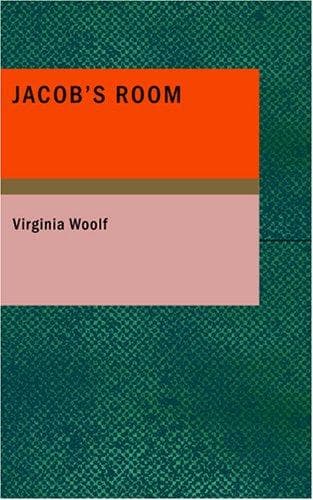
England -- Fiction; Experimental fiction; Psychological fiction; World War, 1914-1918 -- England -- Fiction; Young men -- Fiction
But what brought Jacob Flanders to read Marlowe in the British Museum?
Youth, youth--something savage--something pedantic. For example, there
is Mr. Masefield, there is Mr. Bennett. Stuff them into the flame of
Marlowe and burn them to cinders. Let not a shred remain. Don't palter
with the second rate. Detest your own age. Build a better one. And to
set that on foot read incredibly dull essays upon Marlowe to your
friends. For which purpose one most collate editions in the British
Museum. One must do the thing oneself. Useless to trust to the
Victorians, who disembowel, or to the living, who are mere publicists.
The flesh and blood of the future depends entirely upon six young men.
And as Jacob was one of them, no doubt he looked a little regal and
pompous as he turned his page, and Julia Hedge disliked him naturally
enough.
But then a pudding-faced man pushed a note towards Jacob, and Jacob,
leaning back in his chair, began an uneasy murmured conversation, and
they went off together (Julia Hedge watched them), and laughed aloud
(she thought) directly they were in the hall.
Nobody laughed in the reading-room. There were shirtings, murmurings,
apologetic sneezes, and sudden unashamed devastating coughs. The lesson
hour was almost over. Ushers were collecting exercises. Lazy children
wanted to stretch. Good ones scribbled assiduously--ah, another day over
and so little done! And now and then was to be heard from the whole
collection of human beings a heavy sigh, after which the humiliating old
man would cough shamelessly, and Miss Marchmont hinnied like a horse.
Jacob came back only in time to return his books.
The books were now replaced. A few letters of the alphabet were
sprinkled round the dome. Closely stood together in a ring round the
dome were Plato, Aristotle, Sophocles, and Shakespeare; the literature
of Rome, Greece, China, India, Persia. One leaf of poetry was pressed
flat against another leaf, one burnished letter laid smooth against
another in a density of meaning, a conglomeration of loveliness.
"One does want one's tea," said Miss Marchmont, reclaiming her shabby
umbrella.
Miss Marchmont wanted her tea, but could never resist a last look at the
Elgin Marbles. She looked at them sideways, waving her hand and
muttering a word or two of salutation which made Jacob and the other man
turn round. She smiled at them amiably. It all came into her
philosophy--that colour is sound, or perhaps it has something to do with
music. And having done her service, she hobbled off to tea. It was
closing time. The public collected in the hall to receive their
umbrellas.
Public-domain text, read in full here on John Shaqi.
Reviews
Reviews
No reviews yet
Be the first to share your thoughts on this work.
Elsewhere in the archive
Join the Discussion
Join the discussion
Sign in to leave a comment or review.
Sign InorCreate an account