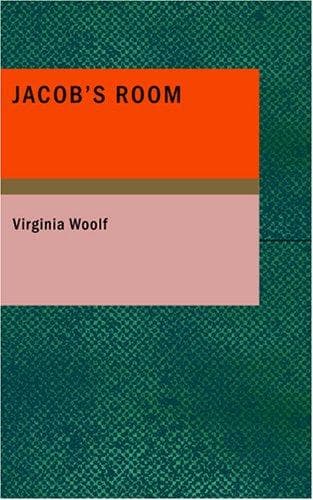
England -- Fiction; Experimental fiction; Psychological fiction; World War, 1914-1918 -- England -- Fiction; Young men -- Fiction
"I am full of love for every one," thought Mrs. Wentworth Williams,
"--for the poor most of all--for the peasants coming back in the evening
with their burdens. And everything is soft and vague and very sad. It is
sad, it is sad. But everything has meaning," thought Sandra Wentworth
Williams, raising her head a little and looking very beautiful, tragic,
and exalted. "One must love everything."
She held in her hand a little book convenient for travelling--stories by
Tchekov--as she stood, veiled, in white, in the window of the hotel at
Olympia. How beautiful the evening was! and her beauty was its beauty.
The tragedy of Greece was the tragedy of all high souls. The inevitable
compromise. She seemed to have grasped something. She would write it
down. And moving to the table where her husband sat reading she leant
her chin in her hands and thought of the peasants, of suffering, of her
own beauty, of the inevitable compromise, and of how she would write it
down. Nor did Evan Williams say anything brutal, banal, or foolish when
he shut his book and put it away to make room for the plates of soup
which were now being placed before them. Only his drooping bloodhound
eyes and his heavy sallow cheeks expressed his melancholy tolerance, his
conviction that though forced to live with circumspection and
deliberation he could never possibly achieve any of those objects which,
as he knew, are the only ones worth pursuing. His consideration was
flawless; his silence unbroken.
"Everything seems to mean so much," said Sandra. But with the sound of
her own voice the spell was broken. She forgot the peasants. Only there
remained with her a sense of her own beauty, and in front, luckily,
there was a looking-glass.
"I am very beautiful," she thought.
She shifted her hat slightly. Her husband saw her looking in the glass;
and agreed that beauty is important; it is an inheritance; one cannot
ignore it. But it is a barrier; it is in fact rather a bore. So he drank
his soup; and kept his eyes fixed upon the window.
"Quails," said Mrs. Wentworth Williams languidly. "And then goat, I
suppose; and then..."
"Caramel custard presumably," said her husband in the same cadence, with
his toothpick out already.
She laid her spoon upon her plate, and her soup was taken away half
finished. Never did she do anything without dignity; for hers was the
English type which is so Greek, save that villagers have touched their
hats to it, the vicarage reveres it; and upper-gardeners and
under-gardeners respectfully straighten their backs as she comes down
the broad terrace on Sunday morning, dallying at the stone urns with the
Prime Minister to pick a rose--which, perhaps, she was trying to forget,
as her eye wandered round the dining-room of the inn at Olympia, seeking
the window where her book lay, where a few minutes ago she had
discovered something--something very profound it had been, about love
and sadness and the peasants.
Public-domain text, read in full here on John Shaqi.
Reviews
Reviews
No reviews yet
Be the first to share your thoughts on this work.
Elsewhere in the archive
Join the Discussion
Join the discussion
Sign in to leave a comment or review.
Sign InorCreate an account