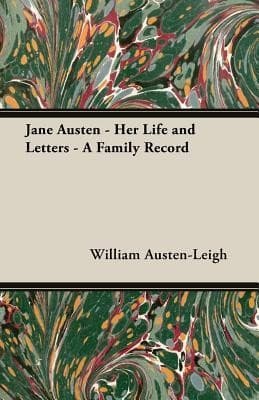
Jane Austen, Her Life and Letters: A Family RecordAusten-Leigh, William
General
Jane Austen, Her Life and Letters: A Family Record
Austen-Leigh, William
Austen, Jane, 1775-1817; Austen, Jane, 1775-1817 -- Family; Novelists, English -- 19th century -- Family relationships
I am gratified by her having pleasure in what I
write, but I wish the knowledge of my being
exposed to her discerning criticism may not hurt
my style, by inducing too great a solicitude. I
begin already to weigh my words and sentences more
than I did, and am looking about for a sentiment,
an illustration, or a metaphor in every corner of
the room. Could my ideas flow as fast as the rain
in the store closet it would be charming.
We have been in two or three dreadful states
within the last week, from the melting of the
snow, &c., and the contest between us and the
closet has now ended in our defeat. I have been
obliged to move almost everything out of it, and
leave it to splash itself as it likes.
You have by no means raised my curiosity after
Caleb.[201] My disinclination for it before was
affected, but now it is real. I do not like the
evangelicals. Of course I shall be delighted when
I read it, like other people, but till I do I
dislike it.
* * * * *
Your silence on the subject of our ball makes me
suppose your curiosity too great for words. We
were very well entertained, and could have stayed
longer but for the arrival of my list shoes to
convey me home, and I did not like to keep them
waiting in the cold. The room was tolerably full,
and the ball opened by Miss Glyn. The Miss Lances
had partners, Captain D'Auvergne's friend appeared
in regimentals, Caroline Maitland had an officer
to flirt with, and Mr. John Harrison was deputed
by Captain Smith, being himself absent, to ask me
to dance. Everything went well, you see,
especially after we had tucked Mrs. Lance's
neckerchief in behind and fastened it with a pin.
* * * * *
Adieu, sweet You. This is grievous news from
Spain. It is well that Dr. Moore was spared the
knowledge of such a son's death.
Monday [January 30].
I am not at all ashamed about the name of the
novel, having been guilty of no insult towards
your handwriting; the diphthong I always saw, but
knowing how fond you were of adding a vowel
wherever you could, I attributed it to that alone,
and the knowledge of the truth does the book no
service; the only merit it could have was in the
name of Caleb, which has an honest, unpretending
sound, but in Coelebs there is pedantry and
affectation. Is it written only to classical
scholars?
Public-domain text, read in full here on John Shaqi.
Reviews
Reviews
No reviews yet
Be the first to share your thoughts on this work.
Elsewhere in the archive
Join the Discussion
Join the discussion
Sign in to leave a comment or review.
Sign InorCreate an account