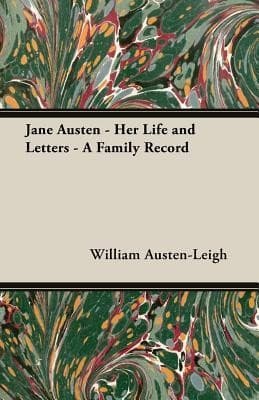
Jane Austen, Her Life and Letters: A Family RecordAusten-Leigh, William
General
Jane Austen, Her Life and Letters: A Family Record
Austen-Leigh, William
Austen, Jane, 1775-1817; Austen, Jane, 1775-1817 -- Family; Novelists, English -- 19th century -- Family relationships
So began the Austens' life at Chawton--probably a quieter life than any
they had yet led; their nearest neighbours being the Middletons (who
rented the 'Great House' for five years and were still its inmates), the
Benns at Faringdon, the Harry Digweeds, Mr. Papillon the Rector (a
bachelor living with his sister), and the Clements and Prowting
families.
The ladies took possession of their cottage on July 7, and the first
news that we have of them is in a letter from Mrs. Knight, dated October
26, 1809: 'I heard of the Chawton party looking very comfortable at
breakfast from a gentleman who was travelling by their door in a
post-chaise about ten days ago.'
After this the curtain falls again, and we have no letters and no
information for a year and a half from this time. We are sure, however,
that Jane settled down to her writing very soon, for by April 1811
_Sense and Sensibility_ was in the printers' hands, and _Pride and
Prejudice_ far advanced.
Since her fit of youthful enthusiasm, when she had composed three
stories in little more than three years, she had had much experience of
life to sober and strengthen her. Three changes of residence, the loss
of her father, the friendship of Mrs. Lefroy and the shock of her
death,[212] her own and her sister's sad love stories, the crisis in the
Leigh Perrot history, and her literary disappointments--all these must
have made her take up her two old works with a chastened spirit, and a
more mature judgment. We cannot doubt that extensive alterations were
made: in fact, we know that this was the case with _Pride and
Prejudice_. We feel equally certain that, of the two works, _Sense and
Sensibility_ was essentially the earlier, both in conception and in
composition, and that no one could have sat down to write that work who
had already written _Pride and Prejudice_.[213] There is, indeed, no
lack of humour in the earlier work--the names of Mrs. Jennings, John
Dashwood, and the Palmers are enough to assure us of this; but the
humorous parts are not nearly so essential to the story as they become
in her later novels: the plot is desultory, and the principal characters
lack interest. We feel, in the presence of the virtue and sense of
Elinor, a rebuke which never affects us in the same way with Jane
Bennet, Fanny Price, or Anne Elliot; while Marianne is often
exasperating. Edward Ferrars is rather stiff; and Colonel Brandon is so
far removed from us that we never even learn his Christian name.
Public-domain text, read in full here on John Shaqi.
Reviews
Reviews
No reviews yet
Be the first to share your thoughts on this work.
Elsewhere in the archive
Join the Discussion
Join the discussion
Sign in to leave a comment or review.
Sign InorCreate an account