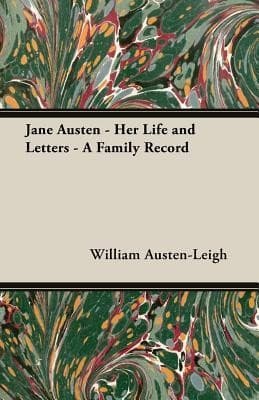
Jane Austen, Her Life and Letters: A Family RecordAusten-Leigh, William
General
Jane Austen, Her Life and Letters: A Family Record
Austen-Leigh, William
Austen, Jane, 1775-1817; Austen, Jane, 1775-1817 -- Family; Novelists, English -- 19th century -- Family relationships
I was quite surrounded by acquaintance, especially
gentlemen; and what with Mr. Hampson,[224] Mr.
Seymour, Mr. W. Knatchbull, Mr. Guillemarde, Mr.
Cure, a Captain Simpson, brother to _the_ Captain
Simpson, besides Mr. Walter and Mr. Egerton, in
addition to the Cookes, and Miss Beckford, and
Miss Middleton, I had quite as much upon my hands
as I could do.
* * * * *
Including everybody we were sixty-six--which was
considerably more than Eliza had expected, and
quite enough to fill the back drawing-room and
leave a few to be scattered about in the other and
in the passage.
The music was extremely good. It opened (tell
Fanny) with 'Poike de Parp pin praise pof
Prapela;'[225] and of the other glees I remember,
'In peace love tunes,' 'Rosabelle,' 'The Red Cross
Knight,' and 'Poor Insect.' Between the songs were
lessons on the harp, or harp and pianoforte
together; and the harp-player was Wiepart, whose
name seems famous, though new to me. There was one
female singer, a short Miss Davis, all in blue,
bringing up for the public line, whose voice was
said to be very fine indeed; and all the
performers gave great satisfaction by doing what
they were paid for, and giving themselves no airs.
No amateur could be persuaded to do anything.
* * * * *
This said Captain Simpson told us, on the
authority of some other Captain just arrived from
Halifax, that Charles[226] was bringing the
_Cleopatra_ home, and that she was probably by
this time in the Channel; but, as Captain S. was
certainly in liquor, we must not quite depend on
it. It must give one a sort of expectation,
however, and will prevent my writing to him any
more. I would rather he should not reach England
till I am at home, and the Steventon party gone.
My mother and Martha both write with great
satisfaction of Anna's behaviour. She is quite an
Anna with variations, but she cannot have reached
her last, for that is always the most flourishing
and showy; she is at about her third or fourth,
which are generally simple and pretty.
* * * * *
Public-domain text, read in full here on John Shaqi.
Reviews
Reviews
No reviews yet
Be the first to share your thoughts on this work.
Elsewhere in the archive
Join the Discussion
Join the discussion
Sign in to leave a comment or review.
Sign InorCreate an account