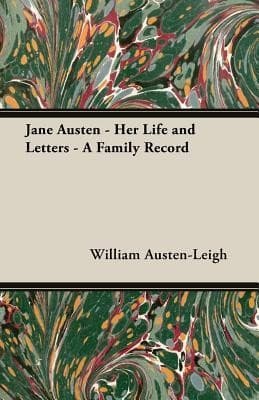
Jane Austen, Her Life and Letters: A Family RecordAusten-Leigh, William
General
Jane Austen, Her Life and Letters: A Family Record
Austen-Leigh, William
Austen, Jane, 1775-1817; Austen, Jane, 1775-1817 -- Family; Novelists, English -- 19th century -- Family relationships
MY DEAR ANNA,--I have been very far from finding
your book an evil, I assure you. I read it
immediately, and with great pleasure. I think you
are going on very well. The description of Dr.
Griffin and Lady Helena's unhappiness is very
good, just what was likely to be. I am curious to
know what the end of _them_ will be. The name of
Newton Priors is really invaluable; I never met
with anything superior to it. It is delightful;
one could live upon the name of Newton Priors for
a twelvemonth. Indeed, I do think you get on very
fast. I only wish other people of my acquaintance
could compose as rapidly. I am pleased with the
dog scene and with the whole of George and Susan's
love, but am more particularly struck with your
_serious_ conversations, etc. They are very good
throughout. St. Julian's history was quite a
surprise to me. You had not very long known it
yourself, I suspect; but I have no objection to
make to the circumstance, and it is very well
told. His having been in love with the aunt gives
Cecilia an additional interest with him. I like
the idea--a very proper compliment to an aunt! I
rather imagine indeed that nieces are seldom
chosen but out of compliment to some aunt or
another. I dare say Ben was in love with me once,
and would never have thought of you if he had not
supposed me dead of a scarlet fever.
* * * * *
[Mrs. Heathcote] writes me word that Miss
Blachford is married, but I have never seen it in
the papers, and one may as well be single if the
wedding is not to be in print.
Your affectionate Aunt,
J. A.
In August 1815 the Lefroys moved from Hendon, and took a small house
called Wyards, near Alton, and within a walk of Chawton. Wyards is more
than once mentioned in our letters.
This is the last letter we possess dealing with Anna's story; and we can
understand that the attention of either writer was soon diverted from
it by more serious considerations: that of Anna by family cares, that of
her aunt by Henry's illness and bankruptcy, and by her own publication
of _Emma_ and subsequent failure of health. The last history of the MS.
was sad enough. After the death of her kind critic, Anna could not
induce herself to go on with the tale; the associations were too
melancholy. Long afterwards, she took it out of its drawer, and, in a
fit of despondency, threw it into the fire. Her daughter, who tells us
this, adds that she herself--a little girl--was sitting on the rug, and
remembers that she watched the destruction, amused with the flame.
Public-domain text, read in full here on John Shaqi.
Reviews
Reviews
No reviews yet
Be the first to share your thoughts on this work.
Elsewhere in the archive
Join the Discussion
Join the discussion
Sign in to leave a comment or review.
Sign InorCreate an account