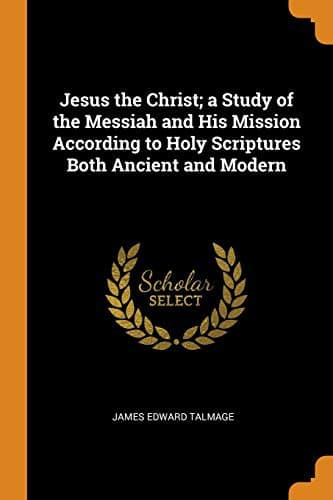
Jesus the Christ: A Study of the Messiah and His Mission According to Holy; Scriptures Both Ancient and ModernTalmage, James E. (James Edward)
Religion
Jesus the Christ: A Study of the Messiah and His Mission According to Holy; Scriptures Both Ancient and Modern
Talmage, James E. (James Edward)
Christian biography -- Palestine; Jesus Christ -- Biography; Jesus Christ -- Mormon interpretations
The commandment to celebrate the Sabbath in strictness was made definite
and explicit in the decalog, written by the hand of God amidst the awful
glory of Sinai; and the injunction was kept before the people through
frequent proclamation.[432] It was unlawful to kindle a fire on that
day; and record is made of a man who was put to death for gathering
sticks on the seventh day.[433] Under the administration of later
prophets, the holiness of the Sabbath, the blessings promised to those
who sanctified the day unto themselves, and the sin of Sabbath
desecration were reiterated in words of inspired forcefulness.[434]
Nehemiah admonished and reproved in the matter, and attributed the
affliction of the nation to the forfeiture of Jehovah's favor through
Sabbath violation.[435] By the mouth of Ezekiel the Lord affirmed that
the institution of the Sabbath was a sign of the covenant between
Himself and the people of Israel; and with stern severity He upbraided
those who heeded not the day.[436] To the separate branch of the
Israelitish nation that had been colonized on the western hemisphere,
regard for the sanctity of the Sabbath was no less an imperative
requirement.[437]
The observance demanded, however, was the very opposite of affliction
and burden; the Sabbath was consecrated to rest and righteous enjoyment,
and was to be a day of spiritual feasting before the Lord. It was not
established as a day of abstinence; all might eat, but both mistress and
maid were to be relieved from the work of preparing food; neither master
nor man was to plow, dig or otherwise toil; and the Weekly day of rest
was as much the boon of the cattle as of their owners.
In addition to the weekly Sabbath, the Lord in mercy prescribed also a
sabbatic year; in every seventh year the land was to rest, and thereby
its fertility was enhanced.[438] After seven times seven years had
passed, the fiftieth was to be celebrated throughout as a year of
jubilee, during which the people should live on the accumulated increase
of the preceding seasons of plenty, and rejoice in liberality by
granting to one another redemption from mortgage and bond, forgiveness
of debt, and general relief from burdens--all of which had to be done in
mercy and justice.[439] The Sabbaths established by the Lord, whether of
days, of years, or of weeks of years, were to be times of refreshing,
relief, blessing, bounty, and worship.
To the many who profess to regard the necessity of toil as a part of the
curse evoked through Adam's fall, the Sabbath should appeal as a day of
temporary reprieve, a time of exemption from labor, and as affording
blessed opportunity of closer approach to the Presence from which
mankind has been shut out through sin. And to those who take the higher
view of life, and find in work both happiness and material blessing, the
periodical relief brings refreshment and gives renewed zest for the days
that follow.
Public-domain text, read in full here on John Shaqi.
Reviews
Reviews
No reviews yet
Be the first to share your thoughts on this work.
Elsewhere in the archive
Join the Discussion
Join the discussion
Sign in to leave a comment or review.
Sign InorCreate an account