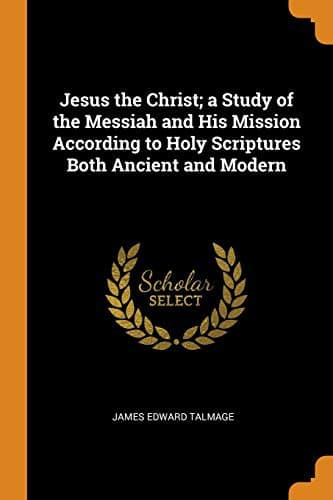
Jesus the Christ: A Study of the Messiah and His Mission According to Holy; Scriptures Both Ancient and ModernTalmage, James E. (James Edward)
Religion
Jesus the Christ: A Study of the Messiah and His Mission According to Holy; Scriptures Both Ancient and Modern
Talmage, James E. (James Edward)
Christian biography -- Palestine; Jesus Christ -- Biography; Jesus Christ -- Mormon interpretations
_"Thy kingdom come. Thy will be done in earth, as it is in heaven."_ The
kingdom of God is to be a kingdom of order, in which toleration and the
recognition of individual rights shall prevail. One who really prays
that this kingdom come will strive to hasten its coming by living
according to the law of God. His effort will be to keep himself in
harmony with the order of the kingdom, to subject the flesh to the
spirit, selfishness to altruism, and to learn to love the things that
God loves. To make the will of God supreme on earth as it is in heaven
is to be allied with God in the affairs of life. There are many who
profess belief that as God is omnipotent, all that is is according to
His will. Such a supposition is unscriptural, unreasonable, and
untrue.[535] Wickedness is not in harmony with His will; falsehood,
hypocrisy, vice and crime are not God's gifts to man. By His will these
monstrosities that have developed as hideous deformities in human nature
and life shall be abolished, and this blessed consummation shall be
reached when by choice, without surrender or abrogation of their free
agency, men shall do the will of God.
_"Give us this day our daily bread."_ Food is indispensable to life. As
we need it we should ask for it. True, the Father knows our need before
we ask, but by asking we acknowledge Him as the Giver, and are made
humble, grateful, contrite, and reliant by the request. Though the sun
shines and the rain falls alike upon the just and the unjust, the
righteous man is grateful for these blessings; the ungodly man receives
the benefits as a matter of course with a soul incapable of gratitude.
The capacity to be grateful is a blessing, for the possession of which
we should be further grateful. We are taught to pray day by day for the
food we need, not for a great store to be laid by for the distant
future. Israel in the desert received manna as a daily supply[536] and
were kept in mind of their reliance upon Him who gave. The man with much
finds it easier to forget his dependence than he who must ask with each
succeeding day of need.
_"And forgive us our debts, as we forgive our debtors."_ He who can thus
pray with full intent and unmixed purpose merits forgiveness. In this
specification of personal supplication we are taught to expect only as
we deserve. The selfish and sinful would rejoice in exemption from their
lawful debts, but being selfish and sinful would exact the last farthing
from those who owe them.[537] Forgiveness is too precious a pearl to be
cast at the feet of the unforgiving;[538] and, without the sincerity
that springs from a contrite heart, no man may justly claim mercy. If
others owe us, either in actual money or goods as suggested by debts and
debtors, or through some infringement upon our rights included under the
broader designation as a trespass, our mode of dealing with them will be
taken into righteous account in the judgment of our own offenses.
Public-domain text, read in full here on John Shaqi.
Reviews
Reviews
No reviews yet
Be the first to share your thoughts on this work.
Elsewhere in the archive
Join the Discussion
Join the discussion
Sign in to leave a comment or review.
Sign InorCreate an account