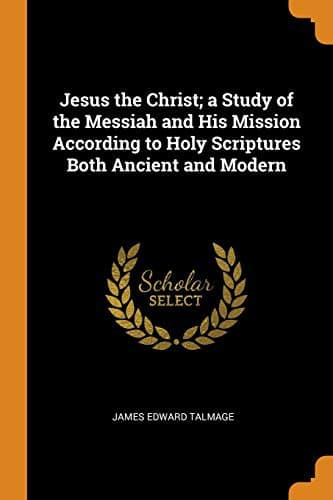
Jesus the Christ: A Study of the Messiah and His Mission According to Holy; Scriptures Both Ancient and ModernTalmage, James E. (James Edward)
Religion
Jesus the Christ: A Study of the Messiah and His Mission According to Holy; Scriptures Both Ancient and Modern
Talmage, James E. (James Edward)
Christian biography -- Palestine; Jesus Christ -- Biography; Jesus Christ -- Mormon interpretations
The words of John's inquiring disciples were answered by wondrous deeds
of beneficence and mercy. When the reply was reported to John, the
imprisoned prophet could scarcely have failed to remember the
predictions of Isaiah, that by those very tokens of miracle and blessing
should the Messiah be known;[567] and the reproof must have been
convincing and convicting as he called to mind his own citations of
Isaiah's prophecies, when he had proclaimed in fiery, withering
eloquence the fulfilment of those earlier predictions in his own mission
and in that of the Mightier One to whom he had borne personal
testimony.[568]
The concluding sentence of our Lord's answer to John was the climax of
what had preceded, and a further though yet gentle rebuke of the
Baptist's defective comprehension of the Messiah's mission. "Blessed is
he, whosoever shall not be offended in me," said the Lord.
Misunderstanding is the prelude to offense. Gaged by the standard of the
then current conception of what the Messiah would be, the work of Christ
must have appeared to many as failure; and those who were looking for
some sudden manifestation of His power in the conquest of Israel's
oppressors and the rehabilitation of the house of David in worldly
splendor, grew impatient, then doubtful; afterward they took offense and
were in danger of turning in open rebellion against their Lord. Christ
has been an offender to many because they, being out of harmony with His
words and works, have of themselves taken offense.[569]
John's situation must be righteously considered by all who assume to
render judgment as to his purpose in sending to inquire of Christ, "Art
thou he that should come?" John thoroughly understood that his own work
was that of preparation; he had so testified and had openly borne
witness that Jesus was the One for whom he had been sent to prepare.
With the inauguration of Christ's ministry, John's influence had waned,
and for many months he had been shut up in a cell, chafing under his
enforced inactivity, doubtless yearning for the freedom of the open, and
for the locusts and wild honey of the desert. Jesus was increasing while
he decreased in popularity, influence, and opportunity; and he had
affirmed that such condition was inevitable.[570]
Public-domain text, read in full here on John Shaqi.
Reviews
Reviews
No reviews yet
Be the first to share your thoughts on this work.
Elsewhere in the archive
Join the Discussion
Join the discussion
Sign in to leave a comment or review.
Sign InorCreate an account