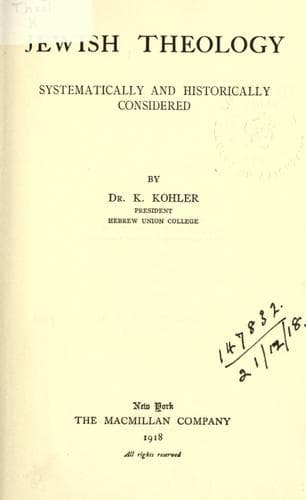
Jewish Theology, Systematically and Historically ConsideredKohler, Kaufmann
Religion
Jewish Theology, Systematically and Historically Considered
Kohler, Kaufmann
Judaism -- Doctrines
calleth to the heavens above—that is, the heavenly element, the soul—and
to the earth beneath—the earthly body—and places them together before His
throne of judgment.’ ”
6. It cannot be denied that the idea that the soul and body, having
committed good or evil deeds together in this life, should receive in
common their reward or punishment in the world to come, satisfied the
Jewish sense of justice better than the conception developed by
Hellenistic Judaism (after the Platonic and, in the last resort, the
Egyptian view) that the soul alone should partake of eternal bliss or
torment. Nevertheless the philosophically trained Jewish thinkers of
Alexandria could not bring themselves to accept a bodily resurrection, and
therefore emphasized so much more strongly the great day of judgment and
the reward and punishment of the soul in the world to come. Still we find
much inconsistency among various authors, sometimes even in the same work,
in the conception of future bliss for the good and torture for the wicked.
These varied according to the more sensuous or more spiritual view taken
of the soul and the celestial world, and according to the literal or
figurative interpretation of the Biblical allusions to “fire,” “worms,”
and the like in the punishment of evil-doers, and of the delights awaiting
the righteous in the future.(961)
On this point free play was allowed to the imagination of the people and
the fancy of the Haggadists. Still, throughout, the solemn thought found
its echo that mortal man must give account to the inexorable Judge of the
living and the dead for the life just completed, in order to be ushered,
according to his deserts, into the portals of the celestial Paradise or of
hell.(962) This led to the view that this whole mundane life is but like a
wayfarers’ inn for the life to come, or the vestibule of the palace (more
precisely the “banquet-hall”) of the future.(963)
Public-domain text, read in full here on John Shaqi.
Reviews
Reviews
No reviews yet
Be the first to share your thoughts on this work.
Elsewhere in the archive
Join the Discussion
Join the discussion
Sign in to leave a comment or review.
Sign InorCreate an account