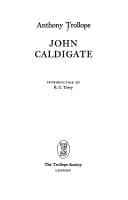
Australia -- Fiction; England -- Fiction; Gold mines and mining -- Fiction
From the conclave which was held on Saturday at Puritan Grange to decide
what should be done, it was impossible to exclude Mrs. Bolton. She was
the young mother's mother, and how should she be excluded? From the
first moment in which something of the truth had reached her ears, it
had become impossible to silence her or to exclude her. To her all those
former faults would have been black as vice itself, even though there
had been no question of a former marriage. Outside active sins, to which
it may be presumed no temptation allured herself, were abominable to
her. Evil thoughts, hardness of heart, suspicions, unforgivingness,
hatred, being too impalpable for denunciation in the Decalogue but lying
nearer to the hearts of most men than murder, theft, adultery, and
perjury, were not equally abhorrent to her. She had therefore allowed
herself to believe all evil of this man, and from the very first had set
him down in her heart as a hopeless sinner. The others had opposed
her,--because the man had money. In the midst of her shipwreck, in the
midst of her misery, through all her maternal agony, there was a certain
triumph to her in this. She had been right,--right from first to last,
right in everything. Her poor old husband was crushed by the feeling
that they had, among them, allowed this miscreant to take their darling
away from them,--that he himself had assented; but she had not assented;
she was not crushed. Before Monday night all Cambridge had heard
something of the story, and then it had been impossible to keep her in
the dark. And now, when the conclave met, of course she was one. The old
man was there, and Robert Bolton, and William the barrister, who had
come down from London to give his advice, and both Mr. and Mrs. Daniel.
Mrs. Daniel, of all the females of the family, was the readiest to
endure the severity of the step-mother, and she was now giving what
comfort she could by her attendance at the Grange.
'Of course she should come home,' said the barrister. Up to this moment
no one had seen Hester since the evil tidings had been made known; but
a messenger had been sent out to Folking with a long letter from her
mother, in which the poor nameless one had been implored to come back
with her baby to her old home till this matter had been settled. The
writer had endeavoured to avoid the saying of hard things against the
sinner; but her feelings had been made very clear. 'Your father and
brothers and all of us think that you should come away from him while
this is pending. Nay; we do not hesitate to say that it is your bounden
duty to leave him.'
Public-domain text, read in full here on John Shaqi.
Reviews
Reviews
No reviews yet
Be the first to share your thoughts on this work.
Elsewhere in the archive
Join the Discussion
Join the discussion
Sign in to leave a comment or review.
Sign InorCreate an account