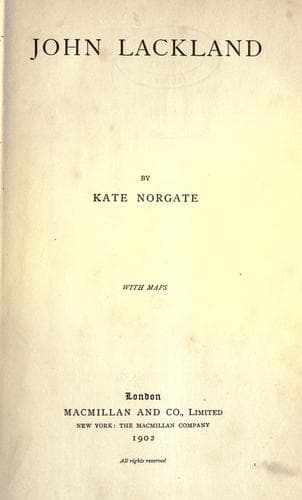
Great Britain -- History -- John, 1199-1216; Great Britain -- Kings and rulers -- Biography; John, King of England, 1167-1216
Meanwhile, John had never lost sight of his plans for a renewal of the
war with France. The first need of course was money. It was probably
in the hope of finding some additional sources of revenue which could
be claimed for the Crown that on his return from Ireland he ordered
an inquiry into all assizes of novel disseisin which had been held
during his absence, and also into the right of presentation to,
and actual tenancy of, all ecclesiastical benefices throughout the
country.[730] An inquest into the services due from the knights and
other tenants-in-chief in every shire was ordered in the same year or
early in the next;[731] and an inquest concerning escheated honours and
the services due from them was set on foot shortly afterwards.[732]
In 1211 “the king of France seized all the English ships that touched
his shores, and therefore”--says the Dunstable annalist--“the king
of England seized many men of the Cinque Ports”;[733] a statement
which we can only suppose to mean one of two things: either that John
suspected some of the ships to have been willing prizes, or that he was
dissatisfied with the way in which his sailors had executed, or failed
to execute, some order which he had given for retaliation. In either
case, however, it is clear that he made his displeasure a ground for
further exactions from the leading men of the southern coast towns.
[Sidenote: 1197–1209]
Of far greater moment than the desultory skirmishes between the
sailors of England and France was the scheme of European coalition
against Philip which John had been gradually building up during the
past ten years. One of the most important elements in his political
calculations throughout those years was the course of events in
Germany. The death of the Emperor Henry VI. in September 1197 had
been followed by a disputed election to the imperial crown, the late
Emperor’s brother, Philip of Suabia, claiming it for himself against
the candidate chosen by the majority of the electors, Otto of Saxony,
a son of Duke Henry the Lion and Maud, daughter of Henry II. of
England.[734] The Suabian prince was backed by his powerful family
connexions, including the duke of Austria, son and successor of Richard
Cœur-de-Lion’s old enemy Leopold. Otto’s youth had been passed in
exile at the court of his Angevin grandfather, and he was a special
favourite of his uncle Richard, who granted him first the earldom of
York and afterwards the county of Poitou, and whose influence with some
of the princes of the empire had had a share in procuring him their
votes. It was, therefore, obvious policy for his rival and the king of
France to make common cause against him and his kinsman of England.
A treaty of alliance between the two Philips was signed on June 29,
1198.[735] In 1200 Otto sent his two brothers to demand for him from
John a renewal of the investiture of York and of Poitou, and also--if
we may believe Roger of Howden--two-thirds of Richard’s treasure and
Public-domain text, read in full here on John Shaqi.
Reviews
Reviews
No reviews yet
Be the first to share your thoughts on this work.
Elsewhere in the archive
Join the Discussion
Join the discussion
Sign in to leave a comment or review.
Sign InorCreate an account