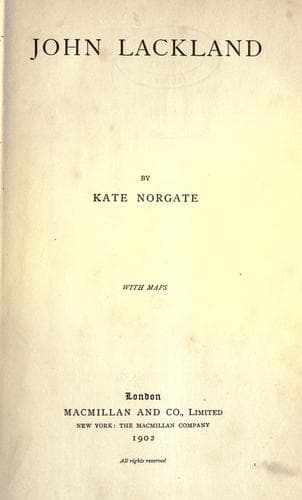
Great Britain -- History -- John, 1199-1216; Great Britain -- Kings and rulers -- Biography; John, King of England, 1167-1216
[778] _Rot. Claus._ vol. i. p. 132 b (_a. r._ 14).
[779] Hunter, _Three Catalogues_, pp. 42, 43; Sweetman, _Cal. Doc.
Ireland_, vol. i. pp. 73, 74 (No. 448).
[780] Cf. _Rot. Claus._ vol. i. p. 126; Innoc. III. _Epp._ l. xv. No.
234, and _Ann. Burton_, a. 1211, 1214.
[781] _Orig. Guelficae_, vol. iii. pp. 340, 341; W. Coventry, vol. ii.
pp. 204, 205.
[782] Martène, _Ampliss. Collectio_, vol. i. col. 1111. Cf. W. Armor.
_Gesta P. A._ cc. 158, 159.
[783] Cf. R. Wendover, vol. iii. pp. 241, 242, and R. Coggeshall, p.
165.
[784] R. Wendover, _l.c._
[785] R. Wendover, vol. iii. pp. 241, 242.
[786] W. Armor. _Gesta P. A._ c. 165.
[787] _Foedera_, vol. i. pt. i. p. 104.
[788] R. Wendover, vol. iii. p. 243. Cf. W. Coventry, vol. ii. p.
209. W. Armor. _Philipp_. l. ix. v. 235, makes the day April 22.
“Culvertage” was the penalty for treason--forfeiture and perpetual
servitude.
[789] W. Coventry, _l.c._
[790] Writ given by R. Wendover, vol. iii. p. 244.
[791] Writ in R. Wendover, vol. iii. p. 245.
[792] R. Wendover, vol. iii. pp. 245, 246. Cf. _Ann. Dunst._ a. 1212
(evidently meant for 1213). John was at Canterbury May 4–6, 1213;
_Itin._ a. 14.
[793] John, who in his prosperous days made almost a parade of
disbelief in William’s loyalty, and delighted in straining it to the
uttermost by saying and doing everything he could think of to insult
and provoke William, nevertheless knew well that in moments of peril
William was the one counsellor to whose disinterestedness he could
safely trust, the one follower on whom he could count unreservedly, the
one friend whom he could not do without. So at the close of 1212 or
early in 1213 he had recalled the Marshal to his side, and proved his
confidence in him by giving him back his two sons who were in England
as hostages (_Hist. de G. le Mar._ vv. 14492–598). The bishop of
Norwich had also come over from Ireland with five hundred knights and
other horsemen to join the muster (R. Wendover, vol. iii. p. 245). It
tells something of the success of John’s measures for the settlement of
the Irish March that the simultaneous absence of the justiciar and the
Marshal, at such a crisis in the king’s fortunes, appears to have been
followed by no disturbance in the country which they thus left without
a ruler.
[794] R. Wendover, vol. iii. p. 246.
[795] See Petit-Dutaillis, _Hist. de Louis VIII._ pp. 37, 38.
[796] The Pope’s letter, the “Forma,” and the “Expositiones” are given
in Innoc. III. _Epp._ l. xv. No. 234. The two former are also in
_Ann. Burton_, a. 1214. I think there can be no doubt that the three
documents together constitute the “quasi peremptorium mandatum” brought
by the three envoys mentioned in W. Coventry, vol. ii. p. 209. Cf.
above, p. 160.
[797] R. Wendover, vol. iii. p. 242.
[798] R. Coggeshall, p. 166.
[799] Cf. W. Coventry, vol. ii. p. 210, and the letter patent in R.
Wendover, vol. iii. pp. 248–52, Innoc. III. _Epp._ l. xvi. No. 76, and
_Foedera_, vol. i. pt. i. p. 111.
Public-domain text, read in full here on John Shaqi.
Reviews
Reviews
No reviews yet
Be the first to share your thoughts on this work.
Elsewhere in the archive
Join the Discussion
Join the discussion
Sign in to leave a comment or review.
Sign InorCreate an account