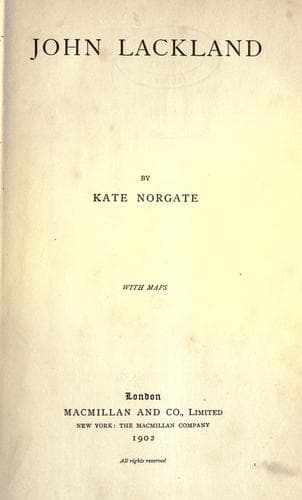
Great Britain -- History -- John, 1199-1216; Great Britain -- Kings and rulers -- Biography; John, King of England, 1167-1216
A third body of troops sent by Louis had arrived in London at the end
of February,[1181] and a letter had been received from Louis himself,
announcing that “by God’s grace” he would “most certainly” be at Calais
ready to cross on Easter Day, April 10.[1182] Encouraged on the one
hand by this assurance, on the other the Londoners had been stirred
into a mood of dangerous defiance by tidings from Rome. On December 16,
1215, the Pope renewed his condemnation of the barons in such a manner
that it could no longer remain what circumstances had made it hitherto,
a dead letter. He excommunicated the rebels, this time not merely in
general terms, but mentioning thirty-one of them by name; he also
placed the city of London under interdict, and he appointed the abbot
of Abingdon and two other commissioners to execute this mandate.[1183]
It seems to have reached England about the end of February 1216.[1184]
The commissioners sent it to all the cathedral and conventual churches
for immediate publication, and it was soon published everywhere except
in London. There the clergy of S. Paul’s, the barons and the citizens
all alike rejected it and appealed against it, declaring that it had
been obtained by “false suggestions, and was therefore of no account,
more especially as the ordering of lay affairs pertained not to the
Pope.”[1185] This last assertion seems ridiculous in the mouths of the
barons, who scarce twelve months before had professed pride in having
compelled the king to surrender to the Pope the temporal overlordship
of England. It was in a spirit of mingled rage at the downfall of the
expectations which they had once founded upon that surrender, and
revived hope of speedy help from France, that the revolutionists who
held the capital met the king’s threat of attack. The citizens opened
their gates and arrayed themselves “ready to go forth and fight with
him if he should approach within ten leagues of the city.”[1186]
Advancing slowly and cautiously, he reached Enfield on the last day of
March;[1187] on the following night he seems to have slept at Waltham
Abbey, “seven little English leagues from London.”[1188] But he came no
nearer. Savaric de Mauléon, venturing on a closer approach, was caught
at unawares and barely escaped with heavy loss of men and with a wound
of which he all but died; a band of “pirates” who attempted to block
the Thames were all either slain, drowned or captured by the Londoners;
and evil tidings came from the north how the rebels there had risen
anew, laid siege to York, and pressed it so hard that the citizens had
been compelled to purchase for a thousand marks a truce till Trinity
Sunday.[1189] From Enfield the king passed round by Berkhamsted to
Windsor and Reading, and thence went south into Hampshire.[1190]
Public-domain text, read in full here on John Shaqi.
Reviews
Reviews
No reviews yet
Be the first to share your thoughts on this work.
Elsewhere in the archive
Join the Discussion
Join the discussion
Sign in to leave a comment or review.
Sign InorCreate an account