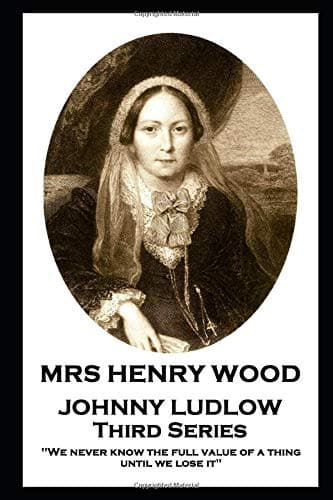
England -- Social life and customs -- 19th century -- Fiction; Short stories, English
Lying midway between our house, Dyke Manor, and Church Dykely, was a
substantial farm belonging to the Caromels. It stood well back from the
road a quarter-of-a-mile or so, and was nearly hidden by the trees
that surrounded it. An avenue led to the house; which was a rambling,
spacious, very old-fashioned building, so full of queer angles inside,
nooks and corners and passages, that you might lose your way in them and
never find it again. The Caromels were gentlemen by descent; but their
means had dwindled with years, so that they had little left besides this
property. The last Caromel who died, generally distinguished as "Old
Caromel" by all the parish, left two sons, Miles and Nash. The property
was willed to the elder, Miles: but Nash continued to have his home with
him. As to the house, it had no particular name, but was familiarly
called "Caromel's Farm."
Squire Todhetley had been always intimate with them; more like a brother
than anything else. Not but that he was considerably their senior. I
think he liked Nash the best: Nash was so yielding and easy. Some said
Nash was not very steady in private life, and that his brother, Miles,
stern and moral, read him a lecture twice a-week. But whether it was so
no one knew; people don't go prying into their neighbours' closets to
look up their skeletons.
At the time I am beginning to tell of, old Caromel had been dead about
ten years; Nash was now five-and-thirty, Miles forty. Miles had married
a lady with a good fortune, which was settled upon herself and her
children; the four of them were girls, and there was no son.
At the other end of Church Dykely, ever so far past Chavasse Grange,
lived a widow lady named Tinkle. And when the world had quite done
wondering whether Nash Caromel meant to marry (though, indeed, what
had he to marry upon?), it was suddenly found out that he wanted Mrs.
Tinkle's daughter, Charlotte. The Tinkles were respectable people, but
not equal to the Caromels. Mrs. Tinkle and her son farmed a little land,
she had also a small private income. The son had married well. Just now
he was away; having gone abroad with his wife, whose health was failing.
Charlotte Tinkle was getting on towards thirty. You would not have
thought it, to look at her. She had a gentle face, a gentle voice, and
a young, slender figure; her light brown hair was always neat; and she
possessed one of those inoffensive natures that would like to be at
peace with the whole world. It was natural that Mrs. Tinkle should wish
her daughter to marry, if a suitable person presented himself--all
mothers do, I suppose--but to find it was Nash Caromel took her aback.
"You think it will not do," observed the Squire, when Mrs. Tinkle was
enlarging on the grievance to him one day that they met in a two-acre
field.
"How can it do?" returned poor Mrs. Tinkle, in a tone between wailing
and crying. "Nash Caromel has nothing to keep her on, sir, and no
prospects."
Public-domain text, read in full here on John Shaqi.
Reviews
Reviews
No reviews yet
Be the first to share your thoughts on this work.
Elsewhere in the archive
Join the Discussion
Join the discussion
Sign in to leave a comment or review.
Sign InorCreate an account