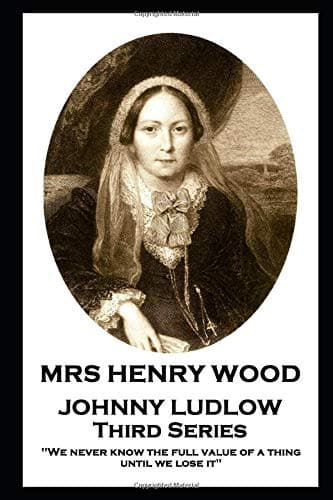
England -- Social life and customs -- 19th century -- Fiction; Short stories, English
"But how _can_ I, I say?" cried Nash ruefully. "You know how
impracticable it is--the impediment that exists."
"Stuff and nonsense, Caromel! Where there's a will there's a way.
Impediments only exist to be got over."
"It would take a cunning man to get over the one that lies between me
and her. I assure you, and you may know I say it in all good faith, that
I should ask nothing better than to be a free man to-morrow--for this
one sole cause."
"Leave things to me. For all you know, you are free now."
The opening of their door by the maid, who had taken her own time to do
it, and the announcement that I waited to see Mr. Caromel, stopped the
rest. Nash came in, and I gave him the note.
"Wants to see me before twelve to-morrow, does he?--something he forgot
to say," cried he, running his eyes over it. "Tell the Squire I will be
there, Johnny."
Caromel was very busy after that, getting into his house--for he took
the Squire's advice, and did not linger much longer at Nave's. And I
think two or three weeks only had passed, after he was in it, when news
reached him of his wife's death.
It came from his agent in New York, Abraham B. Whitter, who had received
the information from San Francisco. Mr. Whitter enclosed the San
Francisco letters. They were written by a Mr. Munn: one letter to
himself, the other (which was not as yet unsealed) to Nash Caromel.
We read them both: Nash brought them to the Squire before sending them
to Mrs. Tinkle--considerate as ever, he would not let her see them until
she had been prepared. The letters did not say much. Mrs. Nash Caromel
had grown weaker and weaker after Nash departed from San Francisco for
New York, and she finally sank under low fever. A diary, which she had
kept the last few weeks of her life, meant only for her husband's own
eye, together with a few letters and sundry other personal trifles,
would be forwarded the first opportunity to Abraham B. Whitter and Co.,
who would hold the box at Mr. Caromel's disposal.
"Who is he, this Francis Munn, who writes to you?" asked the Squire.
"A friend of your wife's?--she appears to have died at his house."
"A true friend of hers and of mine," answered Nash. "It was with Mr. and
Mrs. Munn that I left Charlotte, when I was obliged to go to New York.
She was not well enough to travel with me."
"Well--look here, Caromel--don't go and marry that other Charlotte,"
advised the Squire. "She is as different from your wife as chalk is from
cheese. Poor thing! it was a hard fate--dying over there away from
everybody!"
But now--would any one believe it?--instead of taking the Squire's
advice and not marrying her at all, instead even of allowing a decent
time to elapse, in less than a week Nash went to church with Charlotte
the Second. Shame, said Parson Holland under his breath; shame, said the
parish aloud; but Nash Caromel heeded them not.
Public-domain text, read in full here on John Shaqi.
Reviews
Reviews
No reviews yet
Be the first to share your thoughts on this work.
Elsewhere in the archive
Join the Discussion
Join the discussion
Sign in to leave a comment or review.
Sign InorCreate an account