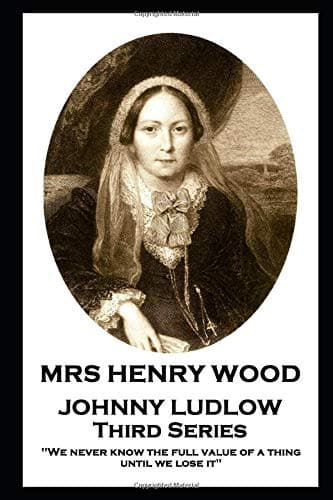
England -- Social life and customs -- 19th century -- Fiction; Short stories, English
The words seemed to make no impression. Pushing her hands back, the
figure was turning impatiently away, when Dobbs seized upon it.
But, in sheer astonishment, or perhaps in terror, Dobbs let go again to
step backwards; and the prize might have escaped but for the strong arms
of Tod. It was indeed Nash Caromel. Not his ghost, but himself.
Nash Caromel worn to the veriest shadow mortal eyes ever gazed upon. The
Squire came up; we all went into the house together, and explanation
ensued.
Nash had not died. When the fever, of which it was feared he would die,
reached its crisis, he awoke to life, not to death. But, terrified
at his position--the warrant, applied for by Henry Tinkle, being out
against him--overwhelmed with a sense of shame, he had feigned death as
the only chance of escaping disgrace and punishment. The first thought
perhaps was Nave's; indeed there was no doubt of it--or his and his
daughter's combined. They wanted to keep the income, you see. Any way,
they carried the thought out, and had successfully contrived to deceive
doctors, undertakers, and the world. Nash, weak as a rat, had got out of
bed to watch his own funeral procession wind down the avenue.
And there, in the upper rooms of the house, he had since lived until
now, old Grizzel sharing the secret. But a grievous complaint, partly
brought on by uneasiness of mind, partly inherited from his father, who
had died of it, had speedily attacked Nash, one for which there was no
cure. It had worn him to a shadow.
He had walked in the garden sometimes. He had come out in the twilight
of the evening or at night; he had now and then passed through the gate
and crossed over to the copse; simply because to live entirely without
fresh air, to remain inactive indoors, was intolerable to him. His wife
and her sister did their best to prevent it. Nave came in the daytime
and would blow him up by the hour together; but they could not always
keep him in. At last they grew alarmed. For, when they attempted to use
force, by locking the doors, he told them that unless he was allowed his
way in this, he would declare himself to the world. Life could not have
been a bed of roses for any of them.
To look at him, as he sat there to-night by the kitchen fire, his cheeks
white and hollow, his sunken eyes encased in dark rims, and his thin
lips on the shiver, you'd hardly have given him a week of life. A great
pity sat in the blacksmith's face.
"Don't reproach yourself, Dobbs: it's the best thing that could have
happened to me," spoke Nash Caromel, kindly. "I am not sure but I should
have gone out this very night and declared myself. Grizzel thought it,
and put herself into a paroxysm of fear. Nobody but myself knows the
yearning to do it that has been upon me. You won't go and tell it out in
the market-place, will you, Dobbs?"
Public-domain text, read in full here on John Shaqi.
Reviews
Reviews
No reviews yet
Be the first to share your thoughts on this work.
Elsewhere in the archive
Join the Discussion
Join the discussion
Sign in to leave a comment or review.
Sign InorCreate an account