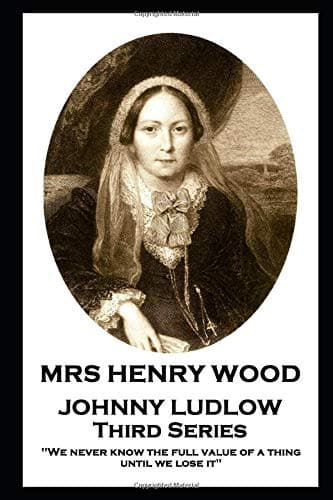
England -- Social life and customs -- 19th century -- Fiction; Short stories, English
There's not much more to tell. As soon as might be, the changes were
carried out. Before Lawyer Nave's leg was fit to go again, Caromel's
Farm had been purchased by the Squire, and Harry Tinkle had taken it
from him on a long lease. Just after Harry got into it with his little
girl, Mrs. Tinkle died; and Charlotte, well off now, came to live in it
with him. The other Charlotte proclaimed herself to be in bad health,
and went off to stay at the sea-side. And Nave, when he came out again
to rejoice the eyes of Church Dykely (walking lame), was fit to swallow
us up with rage. He considered ladies' parasols an infamous institution,
and wished they were all sunk in the sea; especially that particular
blue one of Charlotte's which had led to the accident that unlucky
afternoon.
It seemed strange that, after all the chances and changes, it should be
a Mrs. Nash Caromel (she was always given her true name now) to inhabit
Caromel's Farm. She, forgiving and loving, made friends with little Dun
for poor Nash's sake, inviting him often to spend the day with her, and
picking him choice fruit off the trees.
A DAY IN BRIAR WOOD.
That day, and its events, can never go out of my memory. There are
epochs in life that lie upon the heart for ever, marking the past like
stones placed for retrospect. They may be of pleasure, or they may be of
pain; but there they are, in that great store-field locked up within us,
to be recalled at will as long as life shall last.
It was in August, and one of the hottest days of that hot month. A
brilliant day: the sun shining with never a cloud to soften it, the sky
intensely blue. Just the day for a picnic, provided you had shade.
Shade we had. Briar Wood abounds in it. For the towering trees are dark,
and their foliage thick. Here and there the wood opens, and you come
upon the sweetest little bits of meadow-land scenery that a painter's
eye could desire. Patches of green glade, smooth enough for fairy
revels; undulating banks, draped with ferns and fragrant with sweet
wild-flowers; dells dark, and dim, to roam in and fancy yourself out of
the world.
Briar Wood belonged to Sir John Whitney. It was of a good length but
narrow, terminating at one end in the tangled coppice which we had
dashed through that long-past day when we played at hare and hounds, and
poor Charles Van Rheyn had died, in that same coppice, of the running.
The other and best end, up where these lonely glades lie sheltered,
extends itself nearly to the lands belonging to Vale Farm--if you have
not forgotten that place. The wood was a rare resort for poachers and
gipsies, as well as picnic parties, and every now and again Sir John
would declare that it should be rooted up.
We were staying at Whitney Hall. Miss Deveen was there on a visit
(Cattledon included, of course), and Sir John wrote over to invite us
for a few days to meet her: the Squire and Mrs. Todhetley, I and Tod.
And, there we were, enjoying ourselves like anything.
Public-domain text, read in full here on John Shaqi.
Reviews
Reviews
No reviews yet
Be the first to share your thoughts on this work.
Elsewhere in the archive
Join the Discussion
Join the discussion
Sign in to leave a comment or review.
Sign InorCreate an account