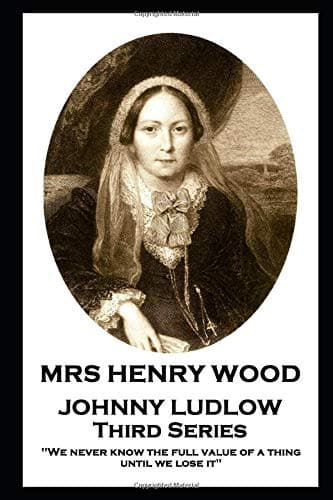
England -- Social life and customs -- 19th century -- Fiction; Short stories, English
"Nothing," he replied, in a low, firm tone. "I--bear with me a moment,
mother--I cannot let Dicky run riot any longer. He is growing up the
very incarnation of selfishness; he thinks the world was made for him
alone; you and his sisters are only regarded by him as so many ministers
to his pleasure. See how he treats you all. See how he treats the
servants. Were I to allow this state of things to continue, how should I
be fulfilling my obligation to my dead father?--my father and Dicky's."
"I will hear no more," spoke Mrs. Knox, possibly thinking the argument
was getting too strong for her. "_I_ have wanted to speak to you,
Arnold, and I may as well do it now. Things must be put on a different
footing up here."
"What things?"
"Money matters. I cannot continue to do upon my small income."
Arnold Knox passed his hand across his troubled brow, almost in despair.
Oh, what a weary subject this was! Not for long together did she ever
give him rest from it.
"Your income is sufficient, mother; I am tired of saying it. It
is between three and four hundred a-year; and you are free from
house-rent."
"Why don't you remind me that the house is yours, and have done with
it!" she cried, her voice harsh and croaking as a raven's.
"Well, it is mine," he said good-humouredly.
"Yes; and instead of settling it upon me when you married, you must
needs settle it on your wife! Don't _you_ talk of selfishness, Arnold."
"My wife does not derive any benefit from it. It has made no difference
to you."
"She would derive it, though, if you died. Where should I be then?"
"I am not going to die, I hope. Oh, mother, if you only knew how these
discussions vex me!"
"Then you should show yourself generous."
"Generous!" he exclaimed, in a pained tone. And, goaded to it by his
remembrance of what he had done for her in the present and in the past,
he went on to speak more plainly than he had ever spoken yet. "Do you
forget that a great portion of what you enjoy should, by right, be mine?
_Is_ mine!"
"Yours!" she scornfully said.
"Yes: mine. Not by legal right, but by moral. When my father died he
left the whole of his property to you. Considerably more than the half
of that property had been brought to him by my mother: some people might
have thought that much should have descended to her son."
"He did not leave me the whole. You had a share of it."
"Not of the income. I had a sum of five hundred pounds left me, for a
specific purpose--to complete my medical education. Mother, I have never
grumbled at this; never. It was my father's will and pleasure that the
whole should be yours, and that it should go to your children after
you; and I am content to think that he did for the best; the house was
obliged to come to me; it had been so settled at my mother's marriage;
but you have continued to live in it, and I have not said you nay."
"It is like you to remind me of all this!"
Public-domain text, read in full here on John Shaqi.
Reviews
Reviews
No reviews yet
Be the first to share your thoughts on this work.
Elsewhere in the archive
Join the Discussion
Join the discussion
Sign in to leave a comment or review.
Sign InorCreate an account