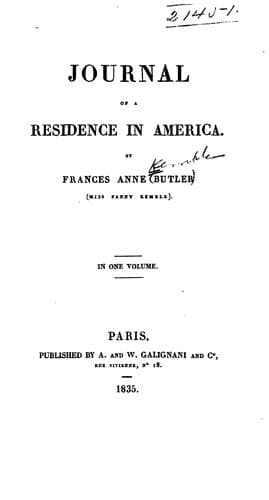
Atlantic States -- Description and travel; Kemble, Fanny, 1809-1893; United States -- Social life and customs -- 1783-1865
[60] It might be a curious and interesting matter of research to
determine under what combination of external circumstances the spirit of
poetry flourishes most vigorously, and good poets have most abounded.
The extremes of poverty and luxury seem alike inimical to its
well-being; yet the latter far more so than the former, for most poets
have been poor; some so poor, as to enrich the world, while they
themselves received so little return from its favour as miserably to
perish of want. Again, the level tenor of a life alike removed from want
and superfluity should seem too devoid of interest or excitement to make
a good poet. Long-lived competency is more favourable to the even temper
of philosophy than the fiery nature of one who must know the storms of
passion, and all the fiercer elements of which the acting and suffering
soul of man is made. Again, it would be curious to know, if it might be
ascertained, whether those men whose inspirations have been aided alone
by the contemplation of the inanimate beauties of nature, and the
phenomena of their own minds and the minds and lives of their fellows,
have been as great poets as those who, besides these sources of
inspiration, fed the power within them with the knowledge of great
writers and poets of other countries and times. Another question, which
it would be interesting to determine, would be, under what species of
government poets have been most numerous, and most honoured. As our
modern exploders of old fallacies have not yet made up their minds
whether such a person as Homer ever lived, it is rather a vain labour of
imagination to determine whether this great king of all poets flourished
under a monarchy or in a republic; certain it is, he sang of kings and
princes in right lordly style: be that as it may, we have rather better
authority for believing that the Greek dramatists, those masters, and
sometime models, of their peculiar branch of the art, flourished under
republican governments; but with them, I think, ends the list of
republican poets of great and universal fame. Rome had no poets till she
had emperors. Italy was, it is true, divided into so called republics
dining the golden age of her literature; but they were so in name alone;
the spirit of equality had long departed from the soil, and they were
merely prouder and more arbitrary aristocracies than have ever existed
under any monarchy in the world. If ever France can be said to have had
a poetical age, it was during the magnificent reign of Louis the
Fourteenth, that pageant that prepared the bloodiest tragedy in the
pages of history. England offers the only exception that I have
advanced, namely, that the republican form of government is inimical to
poetry. For it was during the short and shameful period of fanatical
republicanism, which blots her annals, that the glory and the might of
Milton rose upon the world; he is the only great poet who ever
flourished under a republic; and he was rather the poet of heaven and
Public-domain text, read in full here on John Shaqi.
Reviews
Reviews
No reviews yet
Be the first to share your thoughts on this work.
Elsewhere in the archive
Join the Discussion
Join the discussion
Sign in to leave a comment or review.
Sign InorCreate an account