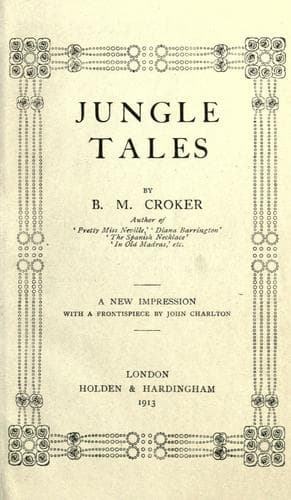
British -- India -- Fiction; India -- History -- British occupation, 1765-1947 -- Fiction; Short stories
In a very short time the warder returned, preceded by a tall convict.
The children stared with wistful, questioning eyes; they did not
recognize Chūnnee, at first glance, in the close-fitting cap drawn
well over his ears, his loose dress, and chains; but after a pause of
breathless amazement he cried, “Array khoda! Girunda and Gyannia, my
children, how came you here?”
They rushed to him at the sound of that familiar voice, and broke into
loud cries and sobs--sobs of joy and relief.
“I walked,” panted the boy presently, “and carried her. Uncle thrust
us forth one night; he said he would kill us if we ever went back, so
we came to thee. We will abide with thee; we will never leave thee,”
sobbed the boy, clinging to his hands, whilst Chūnnee took the girl up
in his arms and fondled her.
“We are so tired and hungry, father; may we not go to thy house and
rest?” and Gyannia dropped her head on his shoulder.
The jail official was much perplexed--here was a most unusual case: two
children clamouring for admittance into an establishment which every
one else was averse to entering.
What was he to do with them? Were they to be left at the gates, to be
sent back to Paroor? One thing was positively certain--they could not
be received inside the jail.
A great multitude had now gathered to behold the convict’s boy, who
had walked seventy miles with his sister on his back. It takes but
little at any time to attract an Indian audience. The crowd was about
to be dispersed by the police, when the jail superintendent drove up
in his brougham for his morning inspection, and alighted, and asked in
amazement the reason of the tumult.
In five minutes he was in possession of all the facts--the thread of
the story--much delayed by constant exclamations and additions from
excited women in the throng.
“So these are thy children?” said the superintendent to Chūnnee.
“Yes, my lord; and it was for the sake of these that I tried to commit
that theft.”
“And thy brother hath turned them out?”
“So they say; and it was like him.”
“Why hath he done so?”
“How can I tell thee, protector of the poor, save that he is a bad man?
His name of Zālim Sing fits him but too well; truly he is a tyrannical
lion. If the bountiful sirkar would only feed my children!”
“You cannot, of course, have these children with you; but I will look
after them for you, at any rate, for the present. You shall see them
again to-morrow. Here, burkundaz; send these children down to my house
on an ekka, and let this crowd disperse.”
As soon as the two objects of curiosity had been rattled off in charge
of a warder, the assembly melted away, each to his own avocation.
Public-domain text, read in full here on John Shaqi.
Reviews
Reviews
No reviews yet
Be the first to share your thoughts on this work.
Elsewhere in the archive
Join the Discussion
Join the discussion
Sign in to leave a comment or review.
Sign InorCreate an account