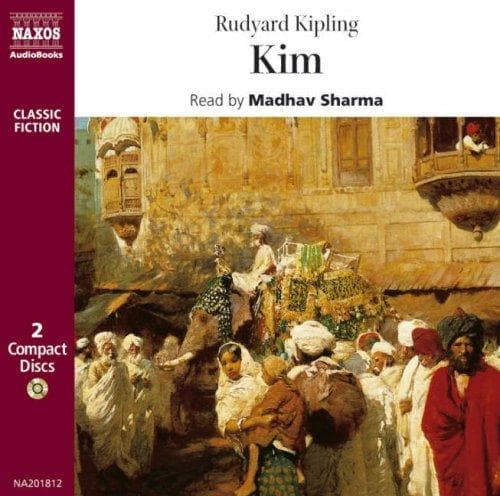
Adventure stories; Boys -- Fiction; India -- Fiction; Irish -- India -- Fiction; Lamas -- Fiction; Orphans -- Fiction; Spy stories
“What evil? Thou hast saved the Sahibs from the death they deserved a
hundred times.”
“The lesson is not well learnt, _chela_.” The lama came to rest on a
folded blanket, as Kim went forward with his evening routine. “The blow
was but a shadow upon a shadow. Evil in itself—my legs weary apace
these latter days!—it met evil in me: anger, rage, and a lust to return
evil. These wrought in my blood, woke tumult in my stomach, and dazzled
my ears.” Here he drank scalding black-tea ceremonially, taking the hot
cup from Kim’s hand. “Had I been passionless, the evil blow would have
done only bodily evil—a scar, or a bruise—which is illusion. But my
mind was _not_ abstracted, for rushed in straightway a lust to let the
Spiti men kill. In fighting that lust, my soul was torn and wrenched
beyond a thousand blows. Not till I had repeated the Blessings” (he
meant the Buddhist Beatitudes) “did I achieve calm. But the evil
planted in me by that moment’s carelessness works out to its end. Just
is the Wheel, swerving not a hair! Learn the lesson, _chela_.”
“It is too high for me,” Kim muttered. “I am still all shaken. I am
glad I hurt the man.”
“I felt that, sleeping upon thy knees, in the wood below. It disquieted
me in my dreams—the evil in thy soul working through to mine. Yet on
the other hand”—he loosed his rosary—“I have acquired merit by saving
two lives—the lives of those that wronged me. Now I must see into the
Cause of Things. The boat of my soul staggers.”
“Sleep, and be strong. That is wisest.”
“I meditate. There is a need greater than thou knowest.”
Till the dawn, hour after hour, as the moonlight paled on the high
peaks, and that which had been belted blackness on the sides of the far
hills showed as tender green forest, the lama stared fixedly at the
wall. From time to time he groaned. Outside the barred door, where
discomfited kine came to ask for their old stable, Shamlegh and the
coolies gave itself up to plunder and riotous living. The Ao-chung man
was their leader, and once they had opened the Sahibs’ tinned foods and
found that they were very good they dared not turn back. Shamlegh
kitchen-midden took the dunnage.
When Kim, after a night of bad dreams, stole forth to brush his teeth
in the morning chill, a fair-coloured woman with turquoise-studded
headgear drew him aside.
“The others have gone. They left thee this _kilta_ as the promise was.
I do not love Sahibs, but thou wilt make us a charm in return for it.
We do not wish little Shamlegh to get a bad name on account of
the—accident. I am the Woman of Shamlegh.” She looked him over with
bold, bright eyes, unlike the usual furtive glance of hillwomen.
“Assuredly. But it must be done in secret.”
She raised the heavy _kilta_ like a toy and slung it into her own hut.
“Out and bar the door! Let none come near till it is finished,” said
Kim.
“But afterwards—we may talk?”
Public-domain text, read in full here on John Shaqi.
Reviews
Reviews
No reviews yet
Be the first to share your thoughts on this work.
Elsewhere in the archive
Join the Discussion
Join the discussion
Sign in to leave a comment or review.
Sign InorCreate an account