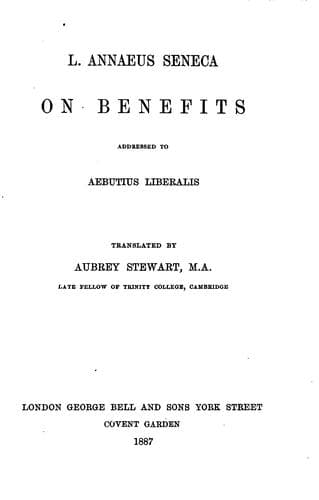
L. Annaeus Seneca on BenefitsSeneca, Lucius Annaeus
Philosophy
L. Annaeus Seneca on Benefits
Seneca, Lucius Annaeus
Benevolence; Classical literature; Conduct of life; Essays
Besides this, he who affirms that a slave does not sometimes confer
a benefit upon his master is ignorant of the rights of man; for the
question is, not what the station in life of the giver may be, but what
his intentions are. The path of virtue is closed to no one, it lies open
to all; it admits and invites all, whether they be free-born men, slaves
or freed-men, kings or exiles; it requires no qualifications of family
or of property, it is satisfied with a mere man. What, indeed, should we
have to trust to for defence against sudden misfortunes, what could--a
noble mind promise to itself to keep unshaken, if virtue could be lost
together with prosperity? If a slave cannot confer a benefit upon his
master, then no subject can confer a benefit upon his king, and no
soldier upon his general; for so long as the man is subject to supreme
authority, the form of authority can make no difference. If main force,
or the fear of death and torture, can prevent a slave from gaining any
title to his master's gratitude, they will also prevent the subjects of
a king, or the soldiers of a general from doing so, for the same things
may happen to either of these classes of men, though under different
names.
Yet men do bestow benefits upon their kings and their generals;
therefore slaves can bestow benefits upon their masters. A slave can be
just, brave, magnanimous; he can therefore bestow a benefit, for this
is also the part of a virtuous man. So true is it that slaves can bestow
benefits upon their masters, that the masters have often owed their
lives to them.
Public-domain text, read in full here on John Shaqi.
Reviews
Reviews
No reviews yet
Be the first to share your thoughts on this work.
Join the Discussion
Join the discussion
Sign in to leave a comment or review.
Sign InorCreate an account