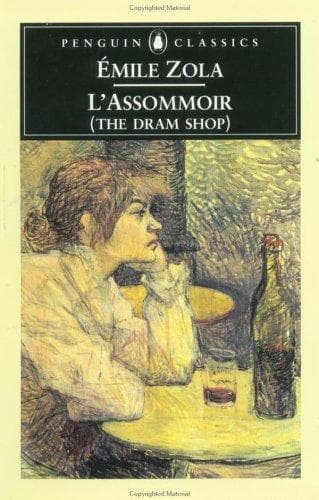
Domestic fiction; Married women -- Fiction; Paris (France) -- Fiction; Working class women -- Fiction
At this moment Goujet coughed in his room. Gervaise slightly started.
_Mon Dieu!_ How she was treated before him. And she remained standing
in the middle of the rooms, embarrassed and confused and waiting for
the dirty clothes; but after making up the account Madame Goujet had
quietly returned to her seat near the window, and resumed the mending
of a lace shawl.
“And the dirty things?” timidly inquired the laundress.
“No, thank you,” replied the old woman, “there will be no laundry this
week.”
Gervaise turned pale. She was no longer to have the washing. Then she
quite lost her head; she was obliged to sit down on a chair, for her
legs were giving way under her. She did not attempt to vindicate
herself. All that she would find to say was:
“Is Monsieur Goujet ill?”
Yes, he was not well. He had been obliged to come home instead of
returning to the forge, and he had gone to lie down on his bed to get a
rest. Madame Goujet talked gravely, wearing her black dress as usual
and her white face framed in her nun-like coif. The pay at the forge
had been cut again. It was now only seven francs a day because the
machines did so much of the work. This forced her to save money every
way she could. She would do her own washing from now on. It would
naturally have been very helpful if the Coupeaus had been able to
return her the money lent them by her son; but she was not going to set
the lawyers on them, as they were unable to pay. As she was talking
about the debt, Gervaise lowered her eyes in embarrassment.
“All the same,” continued the lace-maker, “by pinching yourselves a
little you could manage to pay it off. For really now, you live very
well; and spend a great deal, I’m sure. If you were only to pay off ten
francs a month—”
She was interrupted by the sound of Goujet’s voice as he called:
“Mamma! Mamma!”
And when she returned to her seat, which was almost immediately, she
changed the conversation. The blacksmith had doubtless begged her not
to ask Gervaise for money; but in spite of herself she again spoke of
the debt at the expiration of five minutes. Oh! She had foreseen long
ago what was now happening. Coupeau was drinking all that the laundry
business brought in and dragging his wife down with him. Her son would
never have loaned the money if he had only listened to her. By now he
would have been married, instead of miserably sad with only unhappiness
to look forward to for the rest of his life. She grew quite stern and
angry, even accusing Gervaise of having schemed with Coupeau to take
advantage of her foolish son. Yes, some women were able to play the
hypocrite for years, but eventually the truth came out.
“Mamma! Mamma!” again called Goujet, but louder this time.
She rose from her seat and when she returned she said, as she resumed
her lace mending:
“Go in, he wishes to see you.”
Public-domain text, read in full here on John Shaqi.
Reviews
Reviews
No reviews yet
Be the first to share your thoughts on this work.
Elsewhere in the archive
Join the Discussion
Join the discussion
Sign in to leave a comment or review.
Sign InorCreate an account