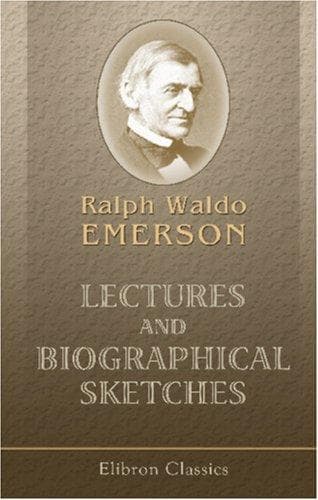
Lectures and biographical sketchesEmerson, Ralph Waldo
Philosophy
Lectures and biographical sketches
Emerson, Ralph Waldo
American essays -- 19th century; Speeches, addresses, etc., American -- 19th century
the piercing of the brass heavens of use and limitation, and letting
in a beam of the pure eternity which burns up this limbo of shadows
and chimeras in which we dwell. Yes, Nature is too strong for us; she
will not be denied; she has balsams for our hurts, and hellebores for
our insanities. She does not bandy words with us, but comes in with a
new ravishing experience and makes the old time ridiculous. Every poet
knows the unspeakable hope, and represents its audacity.
I am not disposed to magnify temporary differences, but for the
moment it appears as if in former times learning and intellectual
accomplishments had secured to the possessor greater rank and
authority. If this were only the reaction from excessive expectations
from literature, now disappointed, it were a just censure. It was
superstitious to exact too much from philosophers and the literary
class. The Sophists, the Alexandrian grammarians, the wits of Queen
Anne’s, the philosophers and diffusion-societies have not much helped
us. Granted, freely granted. Men run out of one superstition into an
opposite superstition, and practical people in America give themselves
wonderful airs. The cant of the time inquires superciliously after the
new ideas; it believes that ideas do not lead to the owning of stocks;
they are perplexing and effeminating.
Young men, I warn you against the clamors of these self-praising
frivolous activities,--against these busybodies; against irrational
labor; against chattering, meddlesome, rich and official people. If
their doing came to any good end! Action is legitimate and good;
forever be it honored! right, original, private, necessary action,
proceeding new from the heart of man, and going forth to beneficent and
as yet incalculable ends. Yes; but not a petty fingering and running, a
senseless repeating of yesterday’s fingering and running; an acceptance
of the method and frauds of other men; an overdoing and busy-ness
which pretends to the honors of action, but resembles the twitches
of St. Vitus. The action of these men I cannot respect, for they do
not respect it themselves. They were better and more respectable abed
and asleep. All the best of this class, all who have any insight or
generosity of spirit are frequently disgusted, and fain to put it
behind them.
Public-domain text, read in full here on John Shaqi.
Reviews
Reviews
No reviews yet
Be the first to share your thoughts on this work.
Elsewhere in the archive
Join the Discussion
Join the discussion
Sign in to leave a comment or review.
Sign InorCreate an account