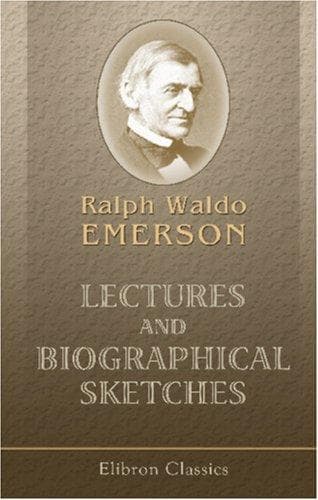
Lectures and biographical sketchesEmerson, Ralph Waldo
Philosophy
Lectures and biographical sketches
Emerson, Ralph Waldo
American essays -- 19th century; Speeches, addresses, etc., American -- 19th century
She delighted in success, in youth, in beauty, in genius, in manners.
When she met a young person who interested her, she made herself
acquainted and intimate with him or her at once, by sympathy, by
flattery, by raillery, by anecdotes, by wit, by rebuke, and stormed the
castle. None but was attracted or piqued by her interest and wit and
wide acquaintance with books and with eminent names. She said she gave
herself full swing in these sudden intimacies, for she knew she should
disgust them soon, and resolved to have their best hours. “Society
is shrewd to detect those who do not belong to her train, and seldom
wastes her attentions.” She surprised, attracted, chided and denounced
her companion by turns, and pretty rapid turns. But no intelligent
youth or maiden could have once met her without remembering her with
interest, and learning something of value. Scorn trifles, lift your
aims: do what you are afraid to do: sublimity of character must come
from sublimity of motive: these were the lessons which were urged with
vivacity, in ever new language. But if her companion was dull, her
impatience knew no bounds. She tired presently of dull conversations,
and asked to be read to, and so disposed of the visitor. If the voice
or the reading tired her, she would ask the friend if he or she would
do an errand for her, and so dismiss them. If her companion were a
little ambitious, and asked her opinions on books or matters on which
she did not wish rude hands laid, she did not hesitate to stop the
intruder with “How’s your cat, Mrs. Tenner?”
“I was disappointed,” she writes, “in finding my little Calvinist
no companion, a cold little thing who lives in society alone, and
is looked up to as a specimen of genius. I performed a mission in
secretly undermining his vanity, or trying to. Alas! never done but by
mortifying affliction.” From the country she writes to her sister in
town, “You cannot help saying that my epistle is a striking specimen of
egotism. To which I can only answer that, in the country, we converse
so much more with ourselves, that we are almost led to forget everybody
else. The very sound of your bells and the rattling of the carriages
have a tendency to divert selfishness.” “This seems a world rather of
trying each others’ dispositions than of enjoying each others’ virtues.”
Public-domain text, read in full here on John Shaqi.
Reviews
Reviews
No reviews yet
Be the first to share your thoughts on this work.
Elsewhere in the archive
Join the Discussion
Join the discussion
Sign in to leave a comment or review.
Sign InorCreate an account