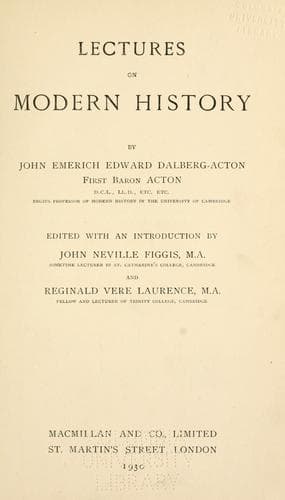
Lectures on Modern historyActon, John Emerich Edward Dalberg Acton, Baron
History
Lectures on Modern history
Acton, John Emerich Edward Dalberg Acton, Baron
History, Modern
The Zamorin, as they called the Rajah of Calicut, ended by taking part
with the old friends from the Arabian Seas, who supplied his country
with grain, against the visitors who came in questionable shape. The
Portuguese lacked the diplomatic graces, and disregarded the art of
making friends and acquiring ascendency by the virtues of humanity and
good faith. When it came to blows, they acquitted themselves like men
conscious that they were the pioneers of History, that their footsteps
were in the van of the onward march, that they were moulding the
future, and making the world subservient to civilisation. They were
Crusaders, coming the other way, and robbing the Moslem of their
resources. The shipbuilding of the Moors depended on the teak forests
of Calicut; the Eastern trade enriched both Turk and Mameluke, and the
Sultan of Egypt levied duty amounting to L290,000 a year. Therefore
he combined with the Venetians to expel the common enemy from Indian
waters. In 1509 their fleet was defeated by the Viceroy Almeida near
Diu, off the coast of Kattywar, where the Arabian seaman comes in
sight of India. It was his last action before he surrendered power to
his rival, the great Albuquerque. Almeida sought the greatness of his
country not in conquest but in commerce. He discouraged expeditions
to Africa and to the Moluccas; for he believed that the control of
Indian traffic could be maintained by sea power, and that land
settlements would drain the resources of the nation. Once the Moslem
traders excluded, Portugal would possess all it wanted, on land and
sea.
Public-domain text, read in full here on John Shaqi.
Reviews
Reviews
No reviews yet
Be the first to share your thoughts on this work.
Elsewhere in the archive
Join the Discussion
Join the discussion
Sign in to leave a comment or review.
Sign InorCreate an account