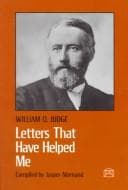
Judge, William Quan, 1851-1896; Theosophists -- United States -- Correspondence; Theosophy
There is, first, our own work, in and on ourselves, each one. That has
for its object the enlightenment of oneself for the good of others.
If that is pursued selfishly some enlightenment comes, but not the
amount needed for the whole work. We have to watch ourselves so as to
make of each a centre from which, in our measure, may flow out the
potentialities for good that from the adept come in large and affluent
streams. The future then, for each, will come from each present moment.
As we use the moment so we shift the future up or down for good or ill;
for the future being only a word for the present--not yet come--we have
to see to the present more than all. If the present is full of doubt or
vacillation, so will be the future; if full of confidence, calmness,
hope, courage and intelligence, thus also will be the future.
As to the broader scope of the work, that comes from united effort of
the whole mass of units. It embraces the race, and as we cannot escape
from the destiny of the race we have to dismiss doubt and continue at
work. The race is, as a whole, in a transition state, and many of its
units are kept back by the condition of the whole. We find the path
difficult because, being of the race, the general race tendencies very
strongly affect us. This we cannot do away with in a moment. It is
useless to groan over it; it is also selfish, since we, in the distant
past, had a hand in making it what it now is. The only way we can alter
it is by such action now as makes of each one a centre for good, a
force that makes "for righteousness," and that is guided by wisdom.
From the great power of the general badness we each one have a greater
fight to wage the moment we force our inner nature up beyond the dead
level of the world. So before we attempt that forcing we should, on the
lower plane, accumulate all that we can of merit by unselfish acts,
by kind thoughts, by detaching our minds from the allurements of the
world. This will not throw us out of the world, but will make us free
from the great force which is called by Bœhme the "Turba," by which he
meant the immense power of the unconscious and material basis of our
nature. That material base being devoid of soul is more inclined on
this plane to the lower things of life than to the higher.
Hence, until we have in some degree conquered that, it is useless for
us to be wishing, as so many of us do, to see the Masters and to be
with Them. They could not help us unless we furnish the conditions, and
a mere desire is not the needed condition. The new condition calls for
a change in thought and nature.
Public-domain text, read in full here on John Shaqi.
Reviews
Reviews
No reviews yet
Be the first to share your thoughts on this work.
Elsewhere in the archive
Join the Discussion
Join the discussion
Sign in to leave a comment or review.
Sign InorCreate an account