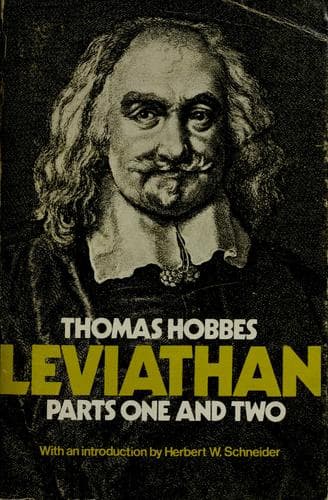
Political science -- Early works to 1800; State, The -- Early works to 1800
In the second place, I observe the Diseases of a Common-wealth, that
proceed from the poyson of seditious doctrines; whereof one is, "That
every private man is Judge of Good and Evill actions." This is true in
the condition of meer Nature, where there are no Civill Lawes; and also
under Civill Government, in such cases as are not determined by the
Law. But otherwise, it is manifest, that the measure of Good and Evill
actions, is the Civill Law; and the Judge the Legislator, who is alwayes
Representative of the Common-wealth. From this false doctrine, men are
disposed to debate with themselves, and dispute the commands of the
Common-wealth; and afterwards to obey, or disobey them, as in their
private judgements they shall think fit. Whereby the Common-wealth is
distracted and Weakened.
Erroneous Conscience
Another doctrine repugnant to Civill Society, is, that "Whatsoever a
man does against his Conscience, is Sinne;" and it dependeth on the
presumption of making himself judge of Good and Evill. For a mans
Conscience, and his Judgement is the same thing; and as the Judgement,
so also the Conscience may be erroneous. Therefore, though he that is
subject to no Civill Law, sinneth in all he does against his Conscience,
because he has no other rule to follow but his own reason; yet it is
not so with him that lives in a Common-wealth; because the Law is the
publique Conscience, by which he hath already undertaken to be guided.
Otherwise in such diversity, as there is of private Consciences, which
are but private opinions, the Common-wealth must needs be distracted,
and no man dare to obey the Soveraign Power, farther than it shall seem
good in his own eyes.
Pretence Of Inspiration
Public-domain text, read in full here on John Shaqi.
Reviews
Reviews
No reviews yet
Be the first to share your thoughts on this work.
Elsewhere in the archive
Join the Discussion
Join the discussion
Sign in to leave a comment or review.
Sign InorCreate an account