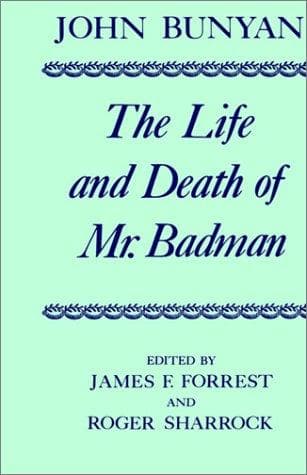
Christian ethics -- Fiction; Christian fiction; Conduct of life -- Fiction
This Text, in both the parts of it, was fulfilled upon him and the
woman that he married first. For her Name still did flourish, though
she had been dead almost seventeen years; but his began to stink and
rot, before he had been buried seventeen dayes.
Atten. That man that dieth with a life full of sin, and with an heart
void of repentance, although he should die of the most Golden disease
(if there were any that might be so called) I will warrant him his Name
shall stink, and that in Heaven and Earth.
Wise. You say true; and therefore doth the name of Cain, Pharaoh, Saul,
Judas, and the Pharisees, though dead thousands of years agoe, stink as
fresh in the nostrils of the world as if they were but newly dead.
Atten. I do fully acquiesce with you in this. But, Sir, since you have
charged him with dying impenitent, pray let me see how you will prove
it: {158a} not that I altogether doubt it, because you have affirmed
it, but yet I love to have proof for what men say in such weighty
matters.
Wise. When I said, he died without repentance, I meant, so far as those
that knew him, could judge, when they compared his Life, the Word, and
his Death together.
Atten. Well said, they went the right way to find out whether he had,
that is, did manifest that he had repentance or no. Now then shew me
how they did prove he had none?
Wise. So I will: And first, {158b} this was urged to prove it. He had
not in all the time of his sickness, a sight and sence of his sins, but
was as secure, and as much at quiet, as if he had never sinned in all
his life.
Atten. I must needs confess that this is a sign he had none. For how
can a man repent of that of which he hath neither sight nor sence? But
’tis strange that he had neither sight nor sence of sin now, when he
had such a sight and sence of his evil before: I mean when he was sick
before.
Wise. He was, as I said, as secure now, as if he had been as sinless as
an Angel; though all men knew what a sinner he was, for he carried his
Sins in his Forehead. His debauched Life was read and known of all men;
but his Reputation was read and known of no man; for, as I said, he had
none. And for ought I know, the reason he had no sence of his sins now,
was because he profited not by that sence that he had of them before.
He liked not to retain that knowledge of God then, that caused his sins
to come to remembrance: Therefore God gave him up now to a reprobate
mind, to hardness and stupidity of Spirit; and so was that Scripture
fulfilled upon him, He hath blinded their eyes. And that, Let their
eyes be darkned that they may not see. {159a} Oh! for a man to live
in sin, and to go out of the world without Repentance for it, is the
saddest Judgement that can overtake a man.
Atten. But, Sir, although both you and I have consented that {159b}
without a sight and sence of sin there can be no Repentance, yet that
is but our bare Say-so; let us therefore now see if by the Scripture we
can make it good.
Public-domain text, read in full here on John Shaqi.
Reviews
Reviews
No reviews yet
Be the first to share your thoughts on this work.
Elsewhere in the archive
Join the Discussion
Join the discussion
Sign in to leave a comment or review.
Sign InorCreate an account