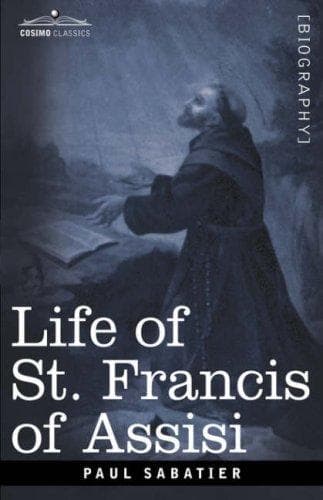
Christian saints -- Biography; Francis, of Assisi, Saint, 1182-1226
[11] 2 Cel., 3, 93; _Spec._, 49b; 182a; _Conform._, 182a, 1;
_Tribul._, f^o 5a; 2 Cel., 3, 98; 113; 115; 1 Cel., 28, 50; 96;
103; 104; 108; 111; 118.
[12] 2 Cel., 3, 27; _Spec._, 38b; _Conform._, 181b, 1;
_Tribul._, 7b. Cf. _Spec._, 220b; _Conform._, 103b.
[13] Francis's successors were nearly all without exception
students of Bologna. Pietro di Catana was doctor of laws, as
also Giovanni Parenti (Giord., 51).--Elias had been _scriptor_
at Bologna.--Alberto of Pisa had been minister there (Eccl.,
6).--Aymon had been reader there (Eccl., 6).--Crescentius wrote
works on jurisprudence (_Conform._, 121b, 1, etc., etc.).
[14] This name cannot be warranted; he is called Giovanni di
Laschaccia in a passage of the _Conformities_ (104a, 1); Pietro
Schiaccia in the Italian MS. of the _Tribulations_ (f^o 75a);
Petrus Stacia in the Laurentinian MS. (13b; cf. _Archiv._, ii.,
p. 258). _Tribul._, 13b; _Spec._, 184b. This story has been much
amplified in other places. _Spec._, 126a; _Conform._, 104b, 1.
[15] Vide Eccl., 3: History of the entrance of Adam of Oxford
into the Order. Cf., _Chartularium Univ. Par._, t. i., nos. 47
and 49.
[16] Eccleston's entire chronicle is a living witness to this.
[17] _Admonitio_, v.; cf. _Conform._, 141a.
Compare the _Constitutiones antiquae_ (_Speculum_, Morin, iii.,
f^o 195b-206) with the Rule. From the opening chapters the
contradiction is apparent: _Ordinamus quod nullus recipiatur in
ordine nostro nisi sit talis clericus qui sit competenter
instructus in grammatica vel logica; aut nisi sit talis laicus
de cujus ingressu esset valde celebris et edificatio in populo
et in clero_. This is surely far from the spirit of him who
said: _Et quicumque venerit amicus vel adversarius fur vel latro
benigne recipiatur_. Rule of 1221, cap. vii. See also the
Exposition of the Rule of Bonaventura. _Speculum_, Morin, iii.,
f^o 21-40.
[18] Upon Francis's attitude toward learning see _Tribul._,
Laur., 14b; _Spec._, 184a; 2 Cel., 3, 8; 48; 100; 116; 119;
120-124. Bon., chap. 152, naturally expresses only Bonaventura's
views. See especially Rule of 1221, cap. xvii.; of 1223, cap. x.
[19] _Spec._, 7b: _Fecit Franciscus regulam quam papa Honorius
confirmavit cum bulla, de qua regula multa fuerunt extracta per
ministros contra voluntatem b. Francisci_. Cf. 2 Cel., 3, 136.
[20] Bull _Quo elongati_ of September 28, 1230; Sbaralea, i., p.
56.
[21] Bon., 55 and 56 [3 Soc., 62]; _Spec._, 76; 124a; _Tribul._,
Laur., 17b-19b; Ubertini, _Arbor. V._, 5; _Conform._, 88a, 2.
[22] _Tribul._, Laur., 19a; _Archiv._, t. iii., p. 601. Cf. A.
SS., p. 638e.
Public-domain text, read in full here on John Shaqi.
Reviews
Reviews
No reviews yet
Be the first to share your thoughts on this work.
Elsewhere in the archive
Join the Discussion
Join the discussion
Sign in to leave a comment or review.
Sign InorCreate an account