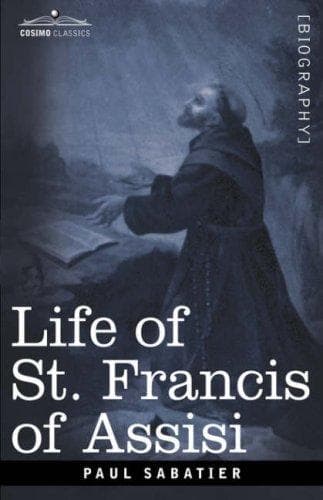
Christian saints -- Biography; Francis, of Assisi, Saint, 1182-1226
Here, more than anywhere else, we must beware of facile theories and
hasty generalizations. The same life described by two equally truthful
contemporaries may take on a very different coloring. This is especially
the case if the man concerned has aroused enthusiasm and wrath, if his
inmost thought, his works, have been the subject of discussion, if the
very men who were commissioned to realize his ideals and carry on his
work are divided, and at odds with one another.
This was the case with St. Francis. In his lifetime and before his own
eyes divergences manifested themselves, at first secretly, then in the
light of day.
In a rapture of love he went from cottage to cottage, from castle to
castle, preaching absolute poverty; but that buoyant enthusiasm, that
unbounded idealism, could not last long. The Order of the Brothers Minor
in process of growth was open not only to a few choice spirits aflame
with mystic fervor, but to all men who aspired after a religious
reformation; pious laymen, monks undeceived as to the virtues of the
ancient Orders, priests shocked at the vices of the secular clergy, all
brought with them--unintentionally no doubt and even unconsciously--too
much of their old man not by degrees to transform the institution.
Francis perceived the peril several years before his death, and made
every effort to avert it. Even in his dying hour we see him summoning
all his powers to declare his Will once again, and as clearly as
possible, and to conjure his Brothers never to touch the Rule, even
under pretext of commenting upon or explaining it. Alas! four years had
not rolled away when Gregory IX., at the prayer of the Brothers
themselves, became the first one of a long series of pontiffs who have
explained the Rule.[1]
Poverty, as Francis understood it, soon became only a memory. The
unexampled success of the Order brought to it not merely new recruits,
but money. How refuse it when there were so many works to found? Many of
the friars discovered that their master had exaggerated many things,
that shades of meaning were to be observed in the Rule, for example,
between counsels and precepts. The door once opened to interpretations,
it became impossible to close it. The Franciscan family began to be
divided into opposing parties often difficult to distinguish.
At first there were a few restless, undisciplined men who grouped
themselves around the older friars. The latter, in their character of
first companions of the Saint, found a moral authority often greater
than the official authority of the ministers and guardians. The people
turned to them by instinct as to the true continuers of St. Francis's
work. They were not far from right.
Public-domain text, read in full here on John Shaqi.
Reviews
Reviews
No reviews yet
Be the first to share your thoughts on this work.
Elsewhere in the archive
Join the Discussion
Join the discussion
Sign in to leave a comment or review.
Sign InorCreate an account