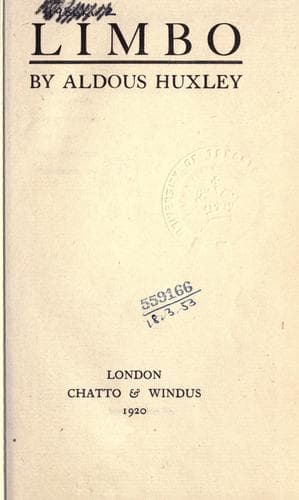
English drama -- 20th century; English fiction -- 20th century; Short stories, English
Emberlin paused a moment to muse. The loss of the work of any ancient
writer gave him the keenest sorrow. I rather believe he had written a
version of the unrecovered books of Petronius. Some day I hope I shall
be permitted to see what conception Emberlin has of the _Satyricon_ as
a whole. He would, I am sure, do Petronius justice--almost too much,
perhaps.
"What was the story of Eupompus?" I asked. "I am all curiosity to
know."
Emberlin heaved a sigh and went on.
"Zuylerius' narrative," he said, "is very bald, but on the whole
lucid; and I think it gives one the main points of the story. I will
give it you in my own words; that is preferable to reading his Dutch
Latin. Eupompus, then, was one of the most fashionable
portrait-painters of Alexandria. His clientele was large, his business
immensely profitable. For a half-length in oils the great courtesans
would pay him a month's earnings. He would paint likenesses of the
merchant princes in exchange for the costliest of their outlandish
treasures. Coal-black potentates would come a thousand miles out of
Ethiopia to have a miniature limned on some specially choice panel of
ivory; and for payment there would be camel-loads of gold and spices.
Fame, riches, and honour came to him while he was yet young; an
unparalleled career seemed to lie before him. And then, quite
suddenly, he gave it all up--refused to paint another portrait. The
doors of his studio were closed. It was in vain that clients, however
rich, however distinguished, demanded admission; the slaves had their
order; Eupompus would see no one but his own intimates."
Emberlin made a pause in his narrative.
"What was Eupompus doing?" I asked.
Public-domain text, read in full here on John Shaqi.
Reviews
Reviews
No reviews yet
Be the first to share your thoughts on this work.
Join the Discussion
Join the discussion
Sign in to leave a comment or review.
Sign InorCreate an account