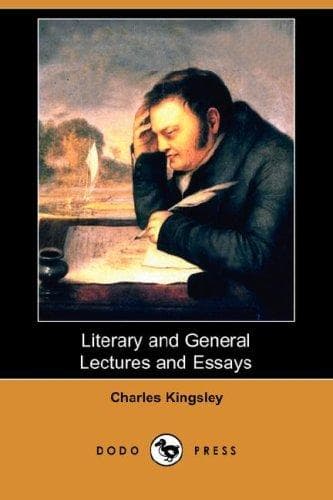
Literary and General Lectures and EssaysKingsley, Charles
History
Literary and General Lectures and Essays
Kingsley, Charles
English literature -- History and criticism
Christianity had helped art a little; but then it was the
Christianity of Julio and Leone--in short, of the worst age of
Popery.
These falsehoods have worked out their own punishment. The young are
examining for themselves, and finding that we have deceived them, a
revulsion in their feelings has taken place, similar to that which
took place in Germany some half-century ago. They are reading the
histories of the Middle Ages, and if we call them barbarous--they
will grant it, and then quote instances of individual heroism and
piety, which they defy us or any honest man not to admire. They are
reading the old legends, and when we call them superstitious--they
grant it, and then produce passages in which the highest doctrines of
Christianity are embodied in the most pathetic and noble stories.
They are looking for themselves at the ante-Raphaellic artists, and
when we tell them that Fra Angelico's pictures are weak, affected,
ill-drawn, ill-coloured--they grant it, and then ask us if we can
deny the sweetness, the purity, the rapt devotion, the saintly
virtue, which shines forth from his faces. They ask us how beautiful
and holy words or figures can be inspired by an evil spirit. They
ask us why they are to deny the excellence of tales and pictures
which make men more pure and humble, more earnest and noble. They
tell us truly that all beauty is God's stamp, and that all beauty
ought to be consecrated to his service. And then they ask us: "If
Protestantism denies that she can consecrate the beautiful, how can
you wonder if we love the Romanism which can? You say that Popery
created these glorious schools of art; how can you wonder if, like
Overbeck, "we take the faith for the sake of the art which it
inspired?"
To all which, be it true or false (and it is both), are we to answer
merely by shutting our eyes and ears tight, and yelling "No Popery!"
or are we to say boldly to them: "We confess ourselves in fault; we
sympathise with your longings; we confess that Protestantism has not
satisfied them; but we assert that the only cause is, that
Protestantism has not been true to herself; that Art, like every
other product of the free human spirit, is her domain and not
Popery's; that these legends, these pictures, are beautiful just in
as far as they contain in them the germs of those eternal truths
about man, nature, and God, which the Reformation delivered from
bondage; that you can admire them, and yet remain thorough
Protestants; and more, that unless you do remain Protestants, you
will never enter into their full beauty and significance, because you
will lose sight of those very facts and ideas from which they derive
all their healthy power over you"?
Public-domain text, read in full here on John Shaqi.
Reviews
Reviews
No reviews yet
Be the first to share your thoughts on this work.
Elsewhere in the archive
Join the Discussion
Join the discussion
Sign in to leave a comment or review.
Sign InorCreate an account