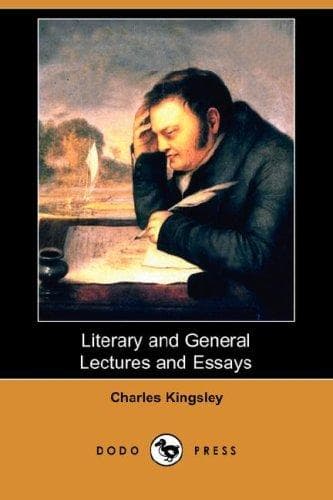
Literary and General Lectures and EssaysKingsley, Charles
History
Literary and General Lectures and Essays
Kingsley, Charles
English literature -- History and criticism
When in the daily service of our Church we repeat these words of the
sublime hymn ("The noble army of martyrs praise Thee!"), I wonder
sometimes whether it be with a full appreciation of their meaning?
whether we do really reflect on all that this noble army of martyrs
has conquered for us? Did they indeed glorify God through their
courage, and seal their faith in their Redeemer with their blood?
And if it be so, how is it that we Christians have learned to look
coldly upon the effigies of those who sowed the seed of the harvest
which we have reaped?--Sanguis martyrum semen Christianorum! We may
admit that the reverence paid to them in former days was unreasonable
and excessive; that credulity and ignorance have in many instances
falsified the actions imputed to them; that enthusiasm has magnified
their numbers beyond all belief; that when the communion with martyrs
was associated with the presence of their material remains, the
passion for relics led to a thousand abuses, and the belief in their
intercession to a thousand superstitions. But why, in uprooting the
false, uproot also the beautiful and the true?
Thoroughly and practically convinced as we are of the truth of these
words, it gave us some pain when, in the work of a very worthy
person, "The Church in the Catacombs," by Dr. Maitland (not the
author of "The Dark Ages"), we found, as far as we could perceive, a
wish "to advance the Protestant cause," by throwing general doubt on
the old martyrologies and their monuments in the Roman catacombs. If
we shall have judged hastily, we shall be ready to apologise. None,
as we have said before, more firmly believe that the Protestant cause
is the good cause; none are more reverentially inclined toward all
honest critical investigations, more anxious to see all truth, the
Bible itself, sifted and tested in every possible method; but we must
protest against what certainly seems too contemptuous a rejection of
a mass of historic evidence hitherto undoubted, except by the school
of Voltaire; and of the hasty denial of the meaning of Christian and
martyrologic symbols, as well known to antiquaries as Stonehenge or
Magna Charta.
Public-domain text, read in full here on John Shaqi.
Reviews
Reviews
No reviews yet
Be the first to share your thoughts on this work.
Elsewhere in the archive
Join the Discussion
Join the discussion
Sign in to leave a comment or review.
Sign InorCreate an account