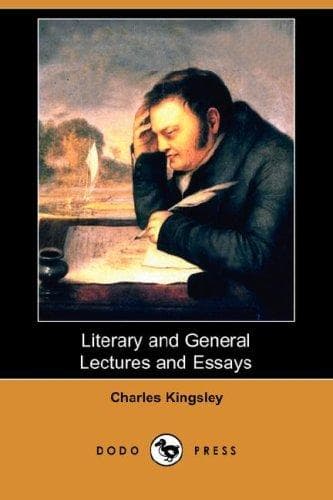
Literary and General Lectures and EssaysKingsley, Charles
History
Literary and General Lectures and Essays
Kingsley, Charles
English literature -- History and criticism
Indeed we do not. Let all the abatements mentioned above, and more,
be granted; yet, even then, when we remember that the world from
which Jerome or Anthony fled was even worse than that denounced by
Juvenal and Persius--that the nuptials which, as legends say, were
often offered the virgin martyrs as alternatives for death, were such
as employed the foul pens of Petronius and Martial--that the tyrants
whom they spurned were such as live in the pages of Suetonius, and
the Augustae Historiae Scriptores--that the gods whom they were
commanded to worship, the rites in which they were to join, were
those over which Ovid and Apuleius had gloated, which Lucian had held
up to the contempt of heathendom itself--that the tortures which they
preferred to apostacy and to foul crimes were, by the confessions of
the heathens themselves, too horrible for pen to tell--it does raise
a flush of indignation to hear some sleek bigot-sceptic, bred up in
the safety and luxury of modern England, among Habeas Corpus Acts and
endowed churches, trying from his warm fireside to sneer away the
awful responsibilities and the heroic fortitude of valiant men and
tender girls, to whose piety and courage he owes the very
enlightenment, the very civilisation, of which he boasts.
It is an error, doubtless, and a fearful one, to worship even such as
them. But the error, when it arose, was at worst the caricature of a
blessed truth. Even for the sinful, surely it was better to admire
holiness than to worship their own sin. Shame on those who, calling
themselves Christians, repine that a Cecilia or a Magdalen replaced
an Isis and a Venus; or who can fancy that they are serving
Protestantism by tracing malevolent likenesses between even the
idolatry of a saint and the idolatry of a devil! True, there was
idolatry in both, as gross in one as the other. And what wonder?
What wonder if, amid a world of courtesans, the nun was worshipped?
At least God allowed it; and will man be wiser than God? "The times
of that ignorance He winked at." The lie that was in it He did not
interfere to punish. He did more; He let it work out, as all lies
will, their own punishment. We may see that in the miserable century
which preceded the glorious Reformation; we may see it in the present
state of Spain and Italy. The crust of lies, we say, punished
itself; to the germ of truth within it we partly owe that we are
Christian men this day.
Public-domain text, read in full here on John Shaqi.
Reviews
Reviews
No reviews yet
Be the first to share your thoughts on this work.
Elsewhere in the archive
Join the Discussion
Join the discussion
Sign in to leave a comment or review.
Sign InorCreate an account