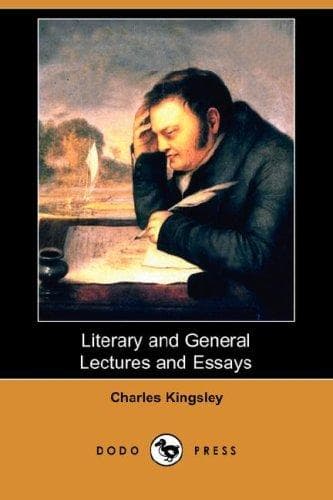
Literary and General Lectures and EssaysKingsley, Charles
History
Literary and General Lectures and Essays
Kingsley, Charles
English literature -- History and criticism
In the angels of Giotto we see the commencement of a softer grace and
a purer taste, further developed by some of his scholars. Benozzo
Gozzoli and Orcagna have left in the Campo Santo examples of the most
graceful and fanciful treatment. Of Benozzo's angels in the Ricardi
Palace I have spoken at length. His master, Angelico (worthy the
name!), never reached the same power of expressing the rapturous
rejoicing of celestial beings, but his conception of the angelic
nature remains unapproached, unapproachable: it is only his, for it
was the gentle, passionless, refined nature of the recluse which
stamped itself there. Angelico's angels are unearthly, not so much
in form as in sentiment; and superhuman, not in power but in purity.
In other hands, any imitation of his soft ethereal grace would become
feeble and insipid. With their long robes falling round their feet,
and drooping many-coloured wings, they seem not to fly or to walk,
but to float along, "smooth sliding without step." Blessed blessed
creatures! love us, only love us! for we dare not task your soft
serene beatitude, by asking you to help us!
There is more sympathy with humanity in Francia's angels: they look
as if they could weep as well as love and sing.
* * * * *
Correggio's angels are grand and lovely, but they are like children
enlarged and sublimated, not like spirits taking the form of
children; where they smile it is truly--as Annibal Caracci expresses
it--con una naturalezza et simplicita che innamora e sforza a ridere
con loro: but the smile in many of Correggio's angel heads has
something sublime and spiritual, as well as simple and natural.
And Titian's angels impress me in a similar manner--I mean those in
the glorious "Assumption" at Venice--with their childish forms and
features, but an expression caught from beholding the face of "our
Father that is in heaven:" it is glorified in fancy. I remember
standing before this picture, contemplating those lovely spirits, one
after another, until a thrill came over me like that which I felt
when Mendelssohn played the organ--I became music while I listened.
The face of one of those angels is to the face of a child just what
that of the Virgin in the same picture is compared with the fairest
of the daughters of earth: it is not here superiority of beauty, but
mind, and music, and love kneaded, as it were, into form and colour.
Public-domain text, read in full here on John Shaqi.
Reviews
Reviews
No reviews yet
Be the first to share your thoughts on this work.
Elsewhere in the archive
Join the Discussion
Join the discussion
Sign in to leave a comment or review.
Sign InorCreate an account