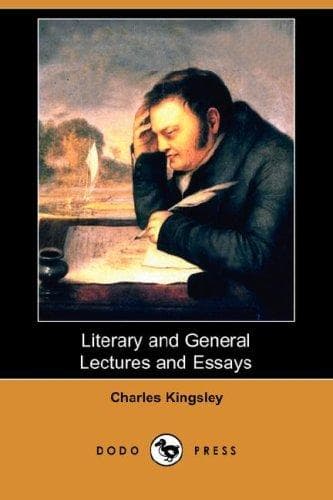
Literary and General Lectures and EssaysKingsley, Charles
History
Literary and General Lectures and Essays
Kingsley, Charles
English literature -- History and criticism
Teach, then, the young, by an extended knowledge of English
literature, thoroughly to comprehend the English spirit, thoroughly
to see that the English mind has its peculiar calling on God's earth,
which alone, and no other, it can fulfil. Teach them thoroughly to
appreciate the artistic and intellectual excellences of their own
country; but by no means in a spirit of narrow bigotry: tell them
fairly our national faults--teach them to unravel those faults from
our national virtues; and then there will be no danger of the
prejudiced English woman becoming by a sudden revulsion an equally
prejudiced cosmopolite and eclectic, as soon as she discovers that
her own nation does not monopolise all human perfections; and so
trying to become German, Italian, French woman, all at once--a
heterogeneous chaos of imitations, very probably with the faults of
all three characters, and the graces of none. God has given us our
own prophets, our own heroines. To recognise those prophets, to
imitate those heroines, is the duty which lies nearest to the English
woman, and therefore the duty which God intends her to fulfil.
I should wish therefore in the first few lectures on English
literature to glance at the character of our old Saxon ancestors, and
the legends connected with their first invasion of the country; and
above all at the magnificent fables of King Arthur and his times
which exercised so great an influence on the English mind, and were
in fact, although originally Celtic, so thoroughly adopted and
naturalised by the Saxon, as to reappear under different forms in
every age, and form the keynote of most of our fictions, from
Geoffrey of Monmouth and the medieval ballads, up to Chaucer,
Spenser, Shakespeare, and at last Milton and Blackmore. This series
of legends will, I think, as we trace its development, bring us in
contact one by one with the corresponding developments of the English
character; and, unless I am much mistaken, enable us to explain many
of its peculiarities.
Public-domain text, read in full here on John Shaqi.
Reviews
Reviews
No reviews yet
Be the first to share your thoughts on this work.
Elsewhere in the archive
Join the Discussion
Join the discussion
Sign in to leave a comment or review.
Sign InorCreate an account