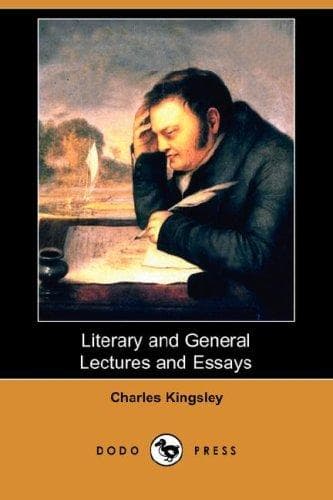
Literary and General Lectures and EssaysKingsley, Charles
History
Literary and General Lectures and Essays
Kingsley, Charles
English literature -- History and criticism
"Is this the inspiration of a god?" she settled down, as the only
escape from madness and suicide, into the latter thought and believed
that she found in the ideal and perfect manhood of One whom she was
told to revere and love as a God, and who had sacrificed His own life
for her, a substitute for that merely human affection from which she
was for ever debarred? Why blame her for not numbering that which
was wanting, or making straight that which was crooked? Let God
judge her, not we: and the fit critics of her conduct are not the
easy gentlemanlike scholars, like Mr. Vaughan's Athertons and Gowers,
discussing the "aberrations of fanaticism" over wine and walnuts; or
the gay girl, Kate; hardly even the happy mother, Mrs. Atherton; but
those whose hairs are gray with sorrow; who have been softened at
once and hardened in the fire of God; who have cried out of the
bottomless deep like David, while lover and friend were hid away from
them, and laid amid the corpses of their dead hopes, dead health,
dead joy, as on a ghastly battle-field, "stript among the dead, like
those who are wounded, and cut away from God's hands;" who have
struggled drowning in the horrible mire of doubt, and have felt all
God's billows and waves sweep over them, till they were weary of
crying, and their sight failed for waiting so long upon God; and all
the faith and prayer which was left was "Thou wilt not leave my soul
in hell, nor suffer thy Holy One to see corruption." Be it
understood, however, for fear of any mistake, that we hold Mr.
Vaughan to be simply and altogether right in his main idea. His one
test for all these people, and all which they said or did, is--Were
they made practically better men and women thereby? He sees clearly
that the "spiritual" is none other than the "moral"--that which has
to do with right and wrong; and he has a righteous contempt for
everything and anything, however graceful and reverent, and artistic
and devout, and celestial and super-celestial, except in as far as he
finds it making better men and women do better work at every-day
life.
But even on this ground we must protest against such a sketch as
this; even of one of the least honourable of the Middle-age saints:
ATHERTON. Angela de Foligni, who made herself miserable--I must say
something the converse of flourished--about the beginning of the
fourteenth century, was a fine model pupil of this sort, a genuine
daughter of St. Francis. Her mother, her husband, her children dead,
she is alone and sorrowful. She betakes herself to violent devotion-
-falls ill--suffers incessant anguish from a complication of
disorders--has rapturous consolations and terrific temptations--is
dashed in a moment from a seat of glory above the empyrean . . .
Public-domain text, read in full here on John Shaqi.
Reviews
Reviews
No reviews yet
Be the first to share your thoughts on this work.
Elsewhere in the archive
Join the Discussion
Join the discussion
Sign in to leave a comment or review.
Sign InorCreate an account