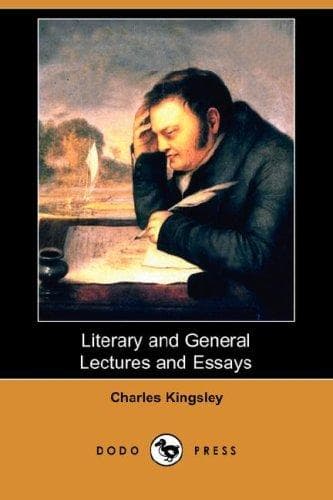
Literary and General Lectures and EssaysKingsley, Charles
History
Literary and General Lectures and Essays
Kingsley, Charles
English literature -- History and criticism
painful to the calmer reader as alluring to those who are struggling
with the same temptations as the poet. Now and then, his trick drags
him down into sheer fustian and bombast; but not always. There is a
terrible Dantean vividness of imagination about him, perhaps
unequalled in England, in his generation. His poems are like his
countenance, coarse and ungoverned, yet with an intensity of eye, a
rugged massiveness of feature, which would be grand but for the
seeming deficiency of love and of humour--love's twin and inseparable
brother. Therefore it is, that although single passages may be found
in his writings, of which Milton himself need not have been ashamed,
his efforts at dramatic poetry are utter failures, dark, monstrous,
unrelieved by any really human vein of feeling or character. As in
feature, so in mind, he has not even the delicate and graceful
organisation which made up in Milton for the want of tenderness, and
so enabled him to write, if not a drama, yet still the sweetest of
masques and idyls.
Rather belonging to the same school than to that of Burns, though
never degrading itself by Elliott's ferocity, is that extraordinary
poem, "The Purgatory of Suicides," by Thomas Cooper. As he is still
in the prime of life, and capable of doing more and better than he
yet has done, we will not comment on it as freely as we have on
Elliott, except to regret a similar want of softness and sweetness,
and also of a clearness and logical connection of thought, in which
Elliott seldom fails, except when cursing. The imagination is hardly
as vivid as Elliott's, though the fancy and invention, the polish of
the style, and the indications of profound thought on all subjects
within the poet's reach, are superior in every way to those of the
Corn-Law Rhymer; and when we consider that the man who wrote it had
to gather his huge store of classic and historic anecdote while
earning his living, first as a shoemaker, and then as a Wesleyan
country preacher, we can only praise and excuse, and hope that the
day may come when talents of so high an order will find some
healthier channel for their energies than that in which they now are
flowing.
Public-domain text, read in full here on John Shaqi.
Reviews
Reviews
No reviews yet
Be the first to share your thoughts on this work.
Elsewhere in the archive
Join the Discussion
Join the discussion
Sign in to leave a comment or review.
Sign InorCreate an account