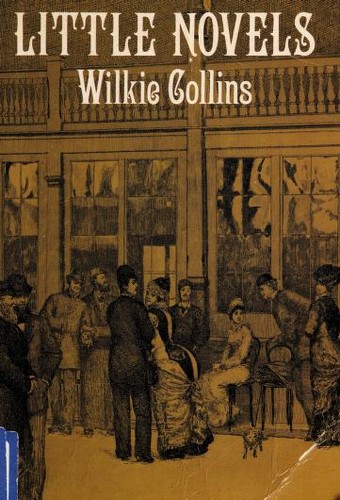
England -- Social life and customs -- 19th century -- Fiction
Half an hour after Mrs. Rymer had left my house, I wrote to her
daughter, plainly revealing the motive which led me to offer marriage,
solely in the future interest of Rothsay and herself. "If you refuse," I
said in conclusion, "you may depend on my understanding you and feeling
for you. But, if you consent--then I have a favor to ask Never let us
speak to one another of the profanation that we have agreed to commit,
for your faithful lover's sake."
I had formed a high opinion of Susan--too high an opinion as it seemed.
Her reply surprised and disappointed me. In other words, she gave her
consent.
I stipulated that the marriage should be kept strictly secret, for a
certain period. In my own mind I decided that the interval should
be held to expire, either on the day of my death, or on the day when
Rothsay returned.
My next proceeding was to write in confidence to the priest whom I have
already mentioned, in an earlier part of these pages. He has reasons of
his own for not permitting me to disclose the motive which induced him
to celebrate my marriage privately in the chapel at Lord Lepel's house.
My uncle's desire that I should try change of air, as offering a last
chance of recovery, was known to my medical attendant, and served as
a sufficient reason (although he protested against the risk) for my
removal to the country. I was carried to the station, and placed on
a bed--slung by ropes to the ceiling of a saloon carriage, so as to
prevent me from feeling the vibration when the train was in motion.
Faithful Mrs. Mozeen entreated to be allowed to accompany me. I was
reluctantly compelled to refuse compliance with this request, in justice
to the claims of my lord's housekeeper; who had been accustomed to
exercise undivided authority in the household, and who had made every
preparation for my comfort. With her own hands, Mrs. Mozeen packed
everything that I required, including the medicines prescribed for the
occasion. She was deeply affected, poor soul, when we parted.
I bore the journey--happily for me, it was a short one--better than had
been anticipated. For the first few days that followed, the purer air of
the country seemed, in some degree, to revive me. But the deadly sense
of weakness, the slow sinking of the vital power in me, returned as the
time drew near for the marriage. The ceremony was performed at night.
Only Susan and her mother were present. No persons in the house but
ourselves had the faintest suspicion of what had happened.
I signed my new will (the priest and Mrs. Rymer being the witnesses)
in my bed that night. It left everything that I possessed, excepting a
legacy to Mrs. Mozeen, to my wife.
Public-domain text, read in full here on John Shaqi.
Reviews
Reviews
No reviews yet
Be the first to share your thoughts on this work.
Elsewhere in the archive
Join the Discussion
Join the discussion
Sign in to leave a comment or review.
Sign InorCreate an account