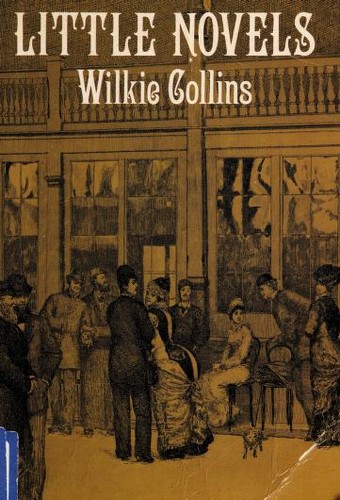
England -- Social life and customs -- 19th century -- Fiction
September 14th.--Thus far I had posted up my Diary on the evening of the
13th, when an event occurred so completely unexpected by my household
and myself, that the pen, I may say, dropped incontinently from my hand.
It was the time when we had finished our tea, or supper--I hardly know
which to call it. In the silence, we could hear the rain pouring against
the window, and the wind that had risen with the darkness howling
round the house. My sister Judith, taking the gloomy view according to
custom--copious draughts of good Bohea and two helpings of such a
mutton ham as only Scotland can produce had no effect in raising her
spirits--my sister, I say, remarked that there would be ships lost
at sea and men drowned this night. My daughter Felicia, the
brightest-tempered creature of the female sex that I have ever met with,
tried to give a cheerful turn to her aunt's depressing prognostication.
"If the ships must be lost," she said, "we may surely hope that the men
will be saved." "God willing," I put in--thereby giving to my daughter's
humane expression of feeling the fit religious tone that was all it
wanted--and then went on with my written record of the events and
reflections of the day. No more was said. Felicia took up a book. Judith
took up her knitting.
On a sudden, the silence was broken by a blow on the house-door.
My two companions, as is the way of women, set up a scream. I was
startled myself, wondering who could be out in the rain and the darkness
and striking at the door of the house. A stranger it must be. Light or
dark, any person in or near Cauldkirk, wanting admission, would know
where to find the bell-handle at the side of the door. I waited a
while to hear what might happen next. The stroke was repeated, but more
softly. It became me as a man and a minister to set an example. I went
out into the passage, and I called through the door, "Who's there?"
A man's voice answered--so faintly that I could barely hear him--"A lost
traveler."
Immediately upon this my cheerful sister expressed her view of the
matter through the open parlor door. "Brother Noah, it's a robber. Don't
let him in!"
What would the Good Samaritan have done in my place? Assuredly he would
have run the risk and opened the door. I imitated the Good Samaritan.
A man, dripping wet, with a knapsack on his back and a thick stick in
his hand, staggered in, and would, I think, have fallen in the passage
if I had not caught him by the arm. Judith peeped out at the parlor
door, and said, "He's drunk." Felicia was behind her, holding up a
lighted candle, the better to see what was going on. "Look at his
face, aunt," says she. "Worn out with fatigue, poor man. Bring him in,
father--bring him in."
Public-domain text, read in full here on John Shaqi.
Reviews
Reviews
No reviews yet
Be the first to share your thoughts on this work.
Elsewhere in the archive
Join the Discussion
Join the discussion
Sign in to leave a comment or review.
Sign InorCreate an account